

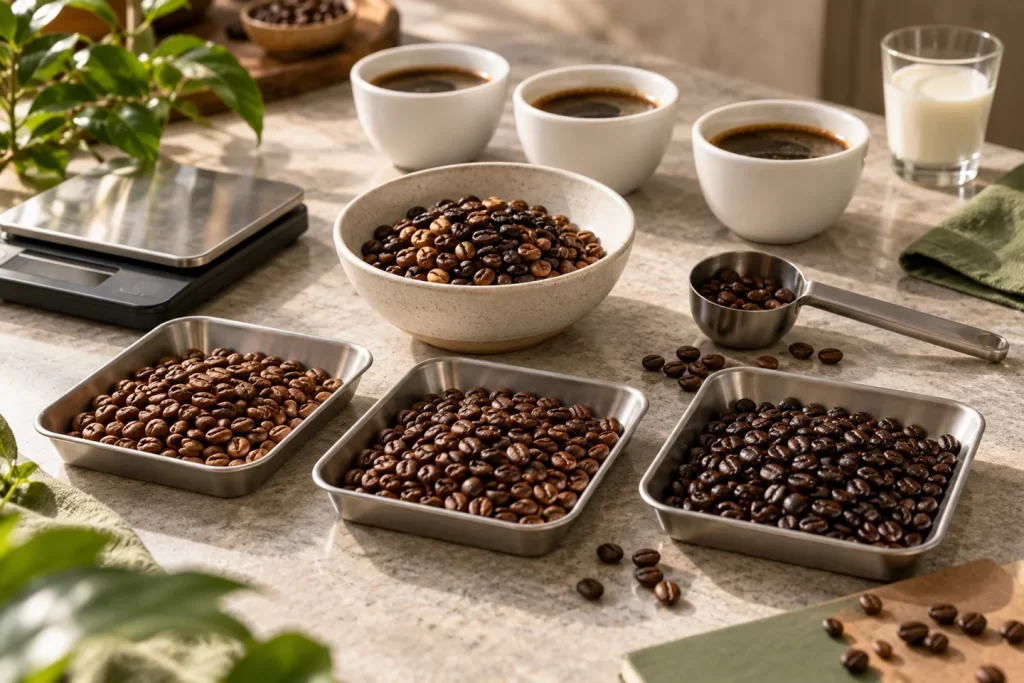
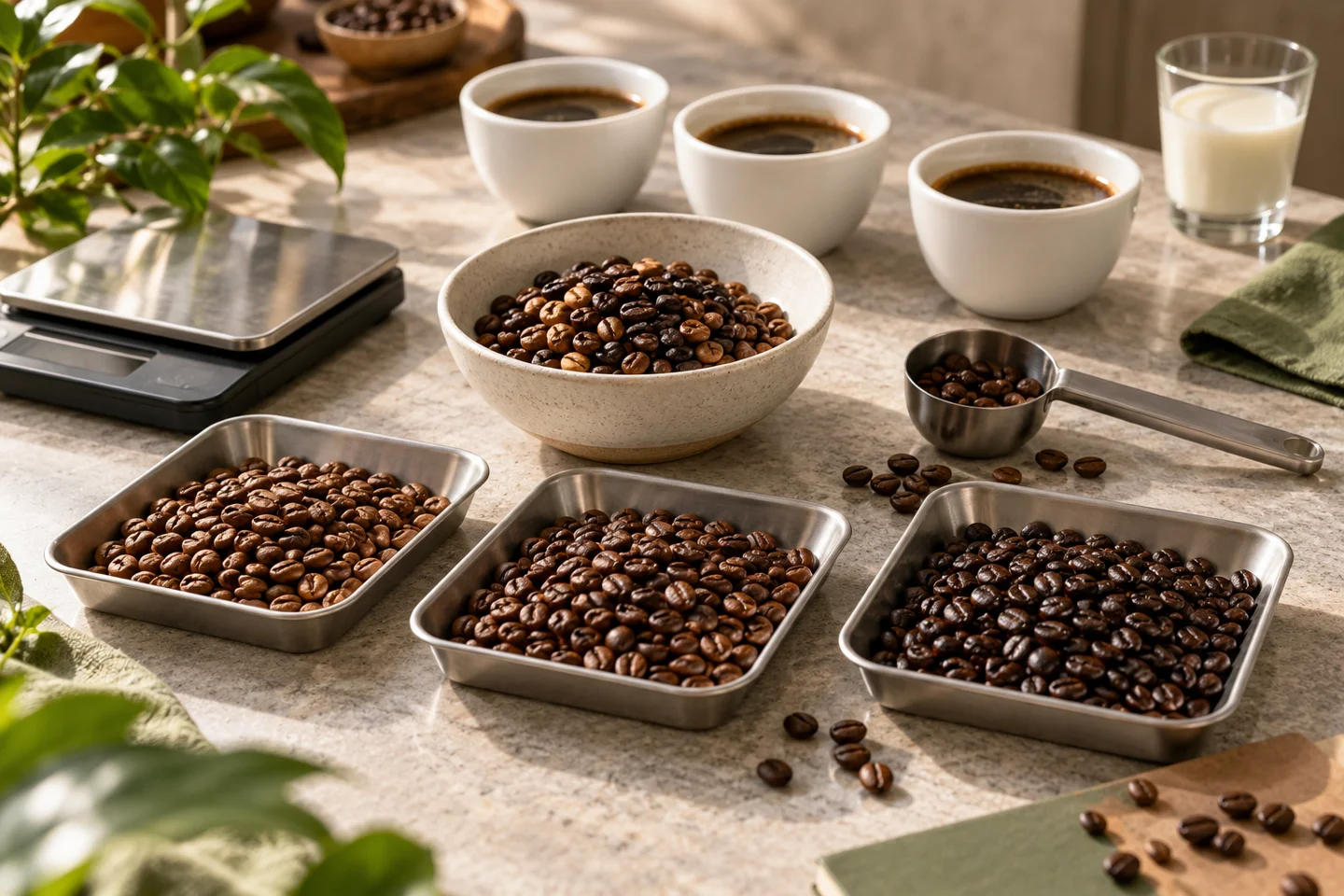
Private label coffee blend development starts with the intended customer, drinks and flavour direction, then moves into ingredient selection and controlled sample trials. A blend ready for a commercial discussion needs an approved sample, a clear version record and an agreed way to assess repeat orders.
This guide is for brand owners, café groups and distributors preparing a coffee product under their own name. It explains how to organise development decisions; recipes, prices, order quantities and production arrangements must be confirmed for each project.
1. Define what the private label blend needs to achieve
A coffee blend combines selected components to support an intended flavour direction. Components may differ in coffee type, origin or roasting approach. Private label describes the brand and product arrangement; it does not automatically mean that an exclusive recipe is included.
When discussing private label coffee development, establish whether the project involves selecting an existing product, adjusting a sample or developing a different direction. Confirm the available scope before starting trials. A new bag design alone does not define a new blend.
2. Turn a flavour idea into a usable brief
Words such as strong, aromatic and smooth can mean different things to different people. Explain who will drink the coffee, which drinks matter most, whether milk or ice is involved and which equipment will be used. If you have a reference product, identify the characteristics to retain and those to change.
For example, a café might want the coffee to remain noticeable in its main milk drink while keeping the finish acceptable to its target customers. That is a trial objective, not a promise about a particular recipe. Where objectives compete, the buyer should explain which ones have priority.
| Area | What to clarify | How to assess it |
|---|---|---|
| Customer | Preferences and drinking context | Recorded feedback from the intended audience |
| Menu | Main drinks and priorities | Prepare the drinks using the intended recipes |
| Flavour | Desired and unwanted characteristics | A consistent sensory record |
| Operations | Equipment, format and preparation | Trials under representative service conditions |
| Commercial scope | Positioning, packaging and repeat orders | Compare quotations for the same specification |
A private label coffee brief helps keep this information in one place. The aim is to agree what a suitable sample means before spending time on repeated adjustments.
3. Discuss ingredient roles before choosing percentages
Instead of starting with a fixed Arabica-to-Robusta ratio, ask what each component is intended to contribute. Which provides the base character, and which supports another requested characteristic? A ratio is only part of the specification: changing an ingredient or roast can change the result even when the percentages remain the same.
The brand owner does not need to prescribe every roasting decision. However, the development record should identify the sample version and how changes are tracked. This gives both sides a useful reference when comparing revisions or discussing another order.
A familiar ratio or a premium-sounding description is not enough to select a product. A blend that works in one black coffee preparation may not meet the requirements of your milk drink. Use the agreed objectives and actual trials to make the decision.
4. Run trials that make differences understandable
Give each sample a version
Record a sample code, receipt date and the purpose of the revision. If the ingredients or roasting approach change, create a new version rather than continuing with an ambiguous name. Feedback such as “the earlier sample was better” is hard to act on without a reliable reference.
Keep preparation conditions sufficiently consistent for comparison. Record the coffee dose, water or beverage yield, grind setting, equipment and preparation method. If both the blend and the drink recipe change at once, do not assume that the blend alone caused the difference.
Separate flavour observations from the approval decision
One part of the record describes what the panel noticed. Another explains whether the sample suits the intended customers and operating conditions. An interesting tasting sample is not automatically the most practical product for every outlet.
When requesting a revision, specify the characteristic to adjust, the drink to test and the conditions to keep unchanged. A menu-based sample approval record can help keep successive rounds comparable. The number of rounds depends on the project and should be discussed rather than assumed.
5. Evaluate the blend in the drinks customers will buy
For a café product, test the principal drinks rather than relying only on a presentation tasting. For retail coffee, consider the intended buyer’s brewing method and equipment. The question is whether the product works in its intended use.
Nestlé Professional’s coffee-menu guidance also discusses selecting coffee around the drinks offered. It supports the general principle of evaluating coffee in context; it is not evidence of Springtime’s own products or operating procedures.
Keep the selected milk, other ingredients and serving method consistent when comparing samples. If a new drink is added, record its results separately instead of silently changing the criteria for the entire project. A café group can also repeat the trial at a representative outlet to check whether the preparation can be reproduced.
6. Approve a sample together with its handover record
Approval should identify the sample version, intended application, reference preparation and authorised approver. Agree how samples will be stored and compared, and when reassessment may be needed. An old sample stored under different conditions is a weak reference without its supporting record.
Clarify the next check if the project moves from a development sample to production or a different delivery format. Sample approval should not become automatic acceptance of later changes. Use a coffee receiving-inspection checklist to connect delivered goods with the relevant product record.
7. Keep repeat orders linked to the approved specification
Reference the agreed product and version on another order, rather than relying on the brand name alone. If ingredients, specifications or commercial requirements change, decide whether another trial is necessary and who can approve it.
Use a shared feedback record for purchasing, operations and the people assessing samples. When a drink differs from expectations, review ingredients, equipment, recipes and preparation before attributing the issue to the blend. This makes the discussion with the supplier more specific.
Recipe-use rights, information to be handed over, change conditions, minimum orders and development timing must be confirmed for the project. There is no universal blend ratio, price or default exclusivity commitment in this guide.
Frequently asked questions
Is there one Arabica-to-Robusta ratio for every private label?
No single ratio suits every project. Selection should reflect the target customer, drinks, ingredient characteristics and trials under the intended conditions of use.
Do I need a complete blend recipe before approaching a supplier?
Not necessarily. Prepare the flavour objectives, customer profile, menu and equipment details. Discuss and confirm the scope of recipe-development support with the supplier.
Why should every sample have a version code?
Version codes connect feedback to the correct sample, identify revisions and prevent confusion between earlier and later samples during trials or approval.
Is tasting the blend as black coffee sufficient?
If the product will be used in milk drinks or signature recipes, test those intended drinks as well. Keep preparation conditions consistent when comparing samples.
Does blend development automatically include recipe exclusivity?
Do not assume exclusivity is included. Recipe-use rights, handover information, permitted scope and change arrangements need to be agreed for the project.
Discuss your coffee blend brief with Springtime
Preparing a coffee line under your own brand? Share the target customers, main drinks, brewing equipment and flavour direction so Springtime can discuss a suitable scope of support. Contact Springtime about your coffee project and agree the requirements before sample development.