

Contract coffee roasting can use green coffee supplied by the customer or beans sourced by the roasting partner. The right arrangement depends on who can control raw-material quality, the intended flavour profile and how responsibilities are divided when a batch does not meet the agreed specification. Set these terms before comparing roasting fees.
This guide is for café operators, distributors and businesses developing a coffee brand. It is a framework for discussing a project, rather than a price list or confirmation that Springtime accepts every customer-supplied green coffee lot.
Customer-supplied beans or roaster-sourced coffee?
In a customer-supplied arrangement, you purchase green coffee and commission the agreed processing steps. Those steps may include roasting, grinding and packaging. You remain responsible for providing information about the lot and arranging a suitable, repeatable supply.
When the roasting partner sources the coffee, you agree on the beans and approve a flavour sample before production. This can reduce procurement work, but it still requires a written product specification and a process for approving changes.
| Decision | Customer supplies beans | Roaster sources beans |
|---|---|---|
| Raw-material selection | Customer selects the lot and provides its records | Both parties agree on required characteristics |
| Incoming checks | Record quantity, packaging condition and lot identity | Define raw-material controls in the product specification |
| Quotation | Separate processing fees from the cost of green coffee | Confirm what the finished-product price includes |
| Repeat orders | Depend on access to a suitable replacement lot | Require an approval process for changes in coffee or flavour |
When does supplying your own green coffee make sense?
This option can suit a business with an established green coffee source, a distinct ingredient requirement or a need to separate procurement from processing costs. For example, a brand purchasing a specific lot may want its identity retained through receiving, roasting and finished-goods records.
Owning the coffee does not automatically establish its suitability for production. Prepare the available information on variety, processing method, receiving date, storage conditions and sample evaluations. Ask the potential roasting partner to assess a representative sample before sending the full shipment.
- Send a sample from the actual lot intended for production.
- Identify bags from different sources or delivery dates.
- Agree on acceptance conditions and circumstances requiring further checks.
- Clarify responsibility for transport, storage and unsuitable material.
When should you use coffee sourced by the roaster?
If your priority is running a café or developing a distribution channel, sourcing through the roasting partner may simplify purchasing. Start with how the coffee will be served: espresso, filter, Vietnamese phin or milk-based drinks. Evaluate samples with the equipment and recipes you intend to use.
Descriptions such as “strong” or “smooth” are not enough to define a repeatable product. Record the approved sample, desired flavour characteristics, whole-bean or ground format and packaging configuration. For a project covering product development and branding, review the scope of ODM and private label cooperation.
What should an incoming green coffee record contain?
A receiving record provides a shared starting point if questions arise later. Record the lot code, delivery date, number of bags, actual received weight and packaging condition. Where measurements or test reports are available, identify the method and provider rather than using an unexplained “passed” label.
Agree on sampling, the person responsible for acceptance and the procedure for reporting concerns. Avoid combining lots before checks are complete when doing so would remove traceability. The exact inspection scope should be confirmed with the processing partner.
Agree on roast loss and the basis for processing fees
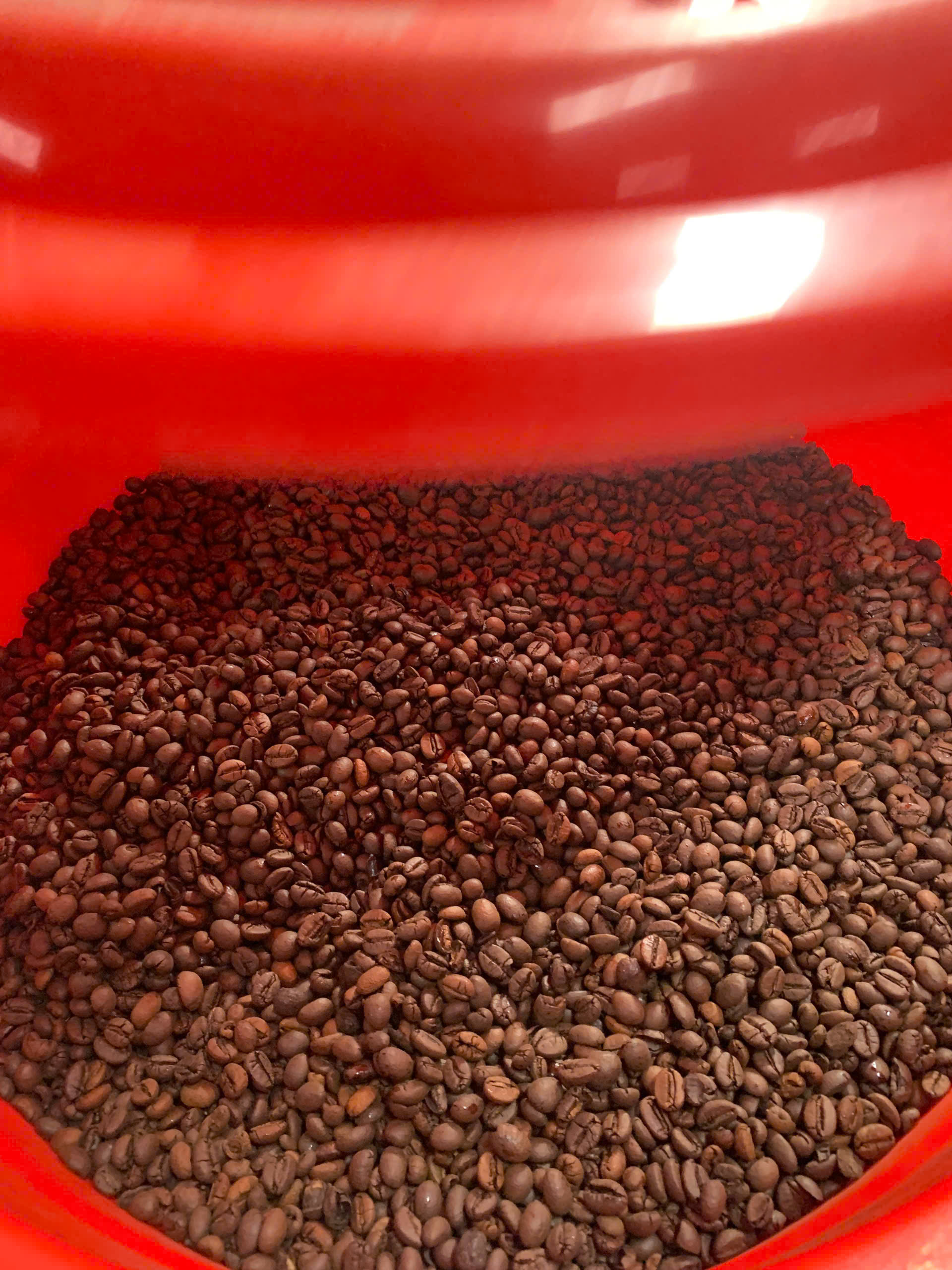
Green input weight and finished coffee weight are different. The Specialty Coffee Association explains moisture loss and changes during roasting. Do not assume that the amount delivered as green coffee will equal the quantity returned as roasted coffee.
Separate post-roast weight from quantities after sorting, grinding and packing. Ask whether the fee is charged against incoming green weight or finished output. Confirm whether trial samples, packaging, transport and storage are included. Avoid applying one unconfirmed loss percentage to every lot.
A useful reconciliation follows this sequence: received input → post-roast quantity → removed material and retained samples → finished quantity delivered. Use an agreed weighing method and record confirmation at each stage. This makes quotations easier to compare without confusing low processing fees with a lower total project cost.
Approve a trial before committing the full lot
A trial checks the fit between the coffee and the intended product. Record the sample reference, roast date, agreed roast level, preparation conditions and tasting feedback. Keep brewing variables consistent so that preparation changes are not mistaken for differences in the coffee.
Define who approves the sample, how reference samples are retained and how production is accepted. A sample that tastes good does not replace a finished-product specification. If the next order uses a different raw-material lot, assess it again instead of assuming the same result.
Checklist for a contract coffee roasting enquiry
- Business use: an operating café, retail brand or distribution project.
- Raw material: customer-supplied or partner-sourced, with available lot details.
- Finished format: whole beans or ground coffee, brewing method and target flavour.
- Scope: roasting only, or additional sorting, grinding, packing and delivery.
- Controls: approved sample, weighing basis, lot records and discrepancy process.
- Commercial terms: request confirmation of accepted quantity, schedule, payment terms and quotation validity.
Get a response to each point before shipping material or committing funds. The coffee OEM manufacturing service is a starting point for discussing projects involving several processing steps. Quantities, costs and timing require project-specific confirmation.
Frequently asked questions
Can I send my own green coffee for roasting?
Discuss the arrangement with the roasting partner first. Provide lot information and a representative sample, then obtain confirmation of acceptance before sending the full shipment.
Are roasting fees based on input or output weight?
The agreed service terms determine the basis. Ask the quotation to state it explicitly and identify additional charges for grinding, packaging, trials and delivery.
Will changing the green coffee lot preserve the same flavour?
Do not assume so. Evaluate a new sample and agree on acceptable differences before repeating production with a changed lot.
Who handles unsuitable incoming coffee?
Agree in advance on checks, notification, isolation of the lot and allocation of costs. Receiving records and retained samples help both parties investigate discrepancies.
Discuss your coffee project with Springtime
Share your intended use, available raw material, product format and packaging requirements. If you already own the green coffee, mention this in the enquiry so that suitability and acceptance can be discussed before shipment.
Explore the Springtime coffee ecosystem or contact the team about your roasting and manufacturing requirements.