



Wholesale coffee beans for resellers should be compared on the same product specification, pack format and delivery basis. A lower purchase price does not automatically produce a suitable margin if the product sells slowly, ties up stock or carries additional costs.
Start by identifying your buyers and deciding between an existing brand and a private-label project. Then test the product and agree the scope of the first order. This guide is for resellers, shops and distributors; it does not publish fixed Springtime prices or dealer terms.
Separate roasted beans, ground coffee and green coffee
When requesting wholesale coffee beans, specify whether you need roasted beans for brewing or green coffee for further processing. These products serve different buyers and cannot be compared directly on price per kilogram alone.
A reseller supplying end users usually needs clear usage information and packs suited to the sales channel. A roaster purchasing green coffee has different input requirements. Ground coffee has already been milled and needs a specified brewing application rather than a simple change of product name.
| Product group | Typical buyer | What to clarify |
|---|---|---|
| Roasted whole beans | Cafés with grinders and users with suitable equipment | Product identity, brewing application, packs and storage instructions |
| Pre-ground coffee | Customers using an agreed phin or filter setup | Grind size, brewing method and expected consumption |
| Green coffee | Roasters and processors | Material type and specifications confirmed for the batch |
Review the Springtime coffee range to prepare a shortlist for discussion. Do not add a line to your purchasing plan only because the variety name is familiar; confirm the actual product and intended customer.
Choose wholesale coffee beans around the resale customer
Supplying cafés
Café buyers need to know whether a product works in their main drinks and existing equipment. Prepare samples, application information and a way to record feedback instead of sending a price list alone.
Distinguish espresso businesses, phin service and mixed brewing setups. The guide to wholesale coffee for cafés by menu and volume can help you prepare customer questions.
Selling in shops or online
Home users need to understand the intended equipment, whether the product is beans or grounds, and how to store it after opening. Use confirmed product information rather than adding unsupported health or quality claims.
Before ordering, check packaging photographs, product details and how different stock codes are distinguished. Expand the range only when there is a clear demand: more shelf choices also mean more stock to manage.
Choose an existing brand or a private label
These are different cooperation scopes. With an existing brand, discuss products, distribution terms and the materials you may use. A private label also involves agreeing the product, packaging artwork and sample approval.
| Item | Existing brand | Private label |
|---|---|---|
| Identity | Supplied brand and packaging | Brand presentation approved by both parties |
| Decisions | Stock codes, sales terms, materials and distribution channels | Production scope, samples, packaging and responsibilities |
| Commercial terms | Confirmed for the product and order | Confirmed for the specification and project |
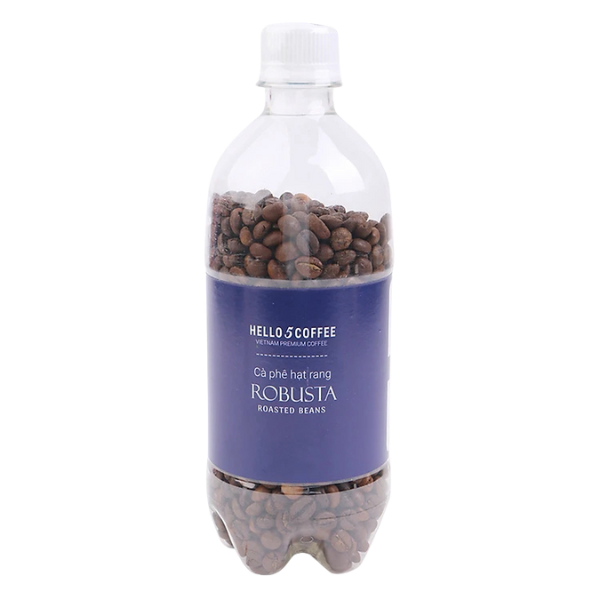
For a branded range, explore Hello 5 Coffee. If your business needs its own name on the pack, discuss private-label coffee separately. Do not assume the same price, minimum quantity or preparation time applies to both routes.
Read wholesale coffee quotations on a common basis
Each quoted line should identify a particular product. Descriptions such as “Robusta” or “espresso coffee” may be insufficient for comparison because the specification, packaging and scope can differ.
Ask for the unit of sale and net weight. Convert pack prices and kilogram prices to a common basis, and distinguish product weight from the weight of shipping packaging.
- Product: stock code, beans or grounds, application and pack format.
- Price basis: applicable quantity, quotation date and validity where specified.
- Other costs: taxes, transport, extra packing and confirmed charges.
- Receiving: delivery point, expected schedule and inspection arrangements.
- Payment: agreed terms; do not assume credit is available.
- Support: product photographs, information and feedback handling within the agreed scope.
Landed cost per unit = total cost of receiving the batch / saleable units in that batch. Then account separately for retail fulfilment, customer delivery, channel fees and other actual selling costs. Avoid counting a charge twice if the supplier quotation already includes it.
The difference between your planned selling price and purchase price is not net profit. It still has to cover relevant expenses, and the plan should be based on your own operating data.
Wholesale pricing, low prices and discounts are different
Wholesale pricing describes a sales arrangement. “Cheap” is a relative judgement, while a discount is an adjustment under stated conditions. The terms do not automatically mean the same thing.
A price is useful only when you know the product and the requirements attached to it. Ask what a discount is calculated against, whether it depends on order size or buying periods, and what charges remain payable.
If reducing initial cash outlay is the goal, discuss range size, packaging and reorder frequency before focusing only on a lower price. Buying more than demand requires can tie up cash even if the price per pack is lower.
Prepare the reseller’s first order
The first order should test both customer demand and cooperation with the supplier. Choose a target buyer group, evaluate products with representative customers and record feedback about brewing, packaging, planned selling price and purchase objections.
Order volume should follow a reasoned forecast and confirmed purchasing conditions. This guide does not set sample quantities, minimum orders or delivery times for Springtime.
- Define the buyer: cafés, retailers or end users.
- Build a shortlist: choose distinct applications rather than overlapping stock codes without separate demand.
- Test and approve: use the appropriate equipment and record sample codes and reviewers.
- Compare quotations: align units and included costs.
- Receive the batch: check product codes, quantities, packaging and agreed batch information.
- Track sales: record receipts, sales, stock and feedback before the next order.
Agree how receiving issues and feedback will be handled
Confirm the contact person, the information needed to report a problem and how both parties will investigate. For taste feedback, record batch details, brewing method and storage conditions. For packaging problems, retain photographs of the goods as received.
Do not assume slow-moving stock is returnable or that a territory is protected. Returns, exclusivity, credit and marketing support need separate confirmation before being treated as agreed terms.
Frequently asked questions
Does wholesale coffee beans mean green coffee?
Not necessarily. Buyers may use the phrase for roasted or green beans. Specify the product form and intended use when requesting a quotation.
Should a new reseller start with many product lines?
Base the initial range on reachable customer groups and stock-management capacity. Without sales data, a larger catalogue alone is not a reason to add more lines.
Does cheaper coffee guarantee a higher profit?
No. Consider sales potential, landed cost, channel fees, operations and stock. A lower purchase price does not guarantee a higher net profit.
Does Springtime have one price list and minimum order for everyone?
Prices and order conditions require confirmation for the product, pack format and requirement. This article does not publish universal terms.
Can a business discuss Hello 5 distribution or a private label?
Submit a brief to discuss either route. Products, supply availability and commercial terms must be confirmed for the particular scope.
Discuss wholesale coffee supply with Springtime
Prepare your target buyers, distribution channels, products of interest, packaging and expected quantity per order. Send your requirements to Springtime to discuss supply and clarify the conditions before agreeing a quotation.