

Choosing a coffee OEM partner in Vietnam requires more than comparing prices or tasting one sample. Buyers should verify who performs each production stage, how samples are approved, what the quotation includes and how quality concerns will be investigated after delivery.
This guide is for coffee brands, café groups, distributors and importers preparing a supplier shortlist. It is a purchasing framework, not a promise about a particular factory’s minimum order, delivery schedule or destination-market compliance.

1. Define the manufacturing support you actually need
A buyer supplying approved beans, a roast specification and finished packaging has a different requirement from a brand starting with a target customer and a product idea. Both may search for an OEM partner, but they should not expect the same proposal. Begin by separating product development from the agreed production work.
List sourcing, sample development, roasting, blending, grinding, packing and delivery. Assign an owner and an approval responsibility to each stage. Review the Springtime OEM service scope before requesting a proposal; the final scope still needs project-specific confirmation.
If the formulation, product format or retail range is not yet defined, discuss private label product development. The labels OEM and ODM are less useful than a written explanation of what each party will provide.
2. Verify the contracting entity and production responsibilities
Ask which company issues the quotation, which entity will contract with you and where the relevant work takes place. If different partners handle roasting, packing or shipment coordination, identify who answers questions about each stage. A coordinated supply model can be workable, provided responsibilities are transparent.
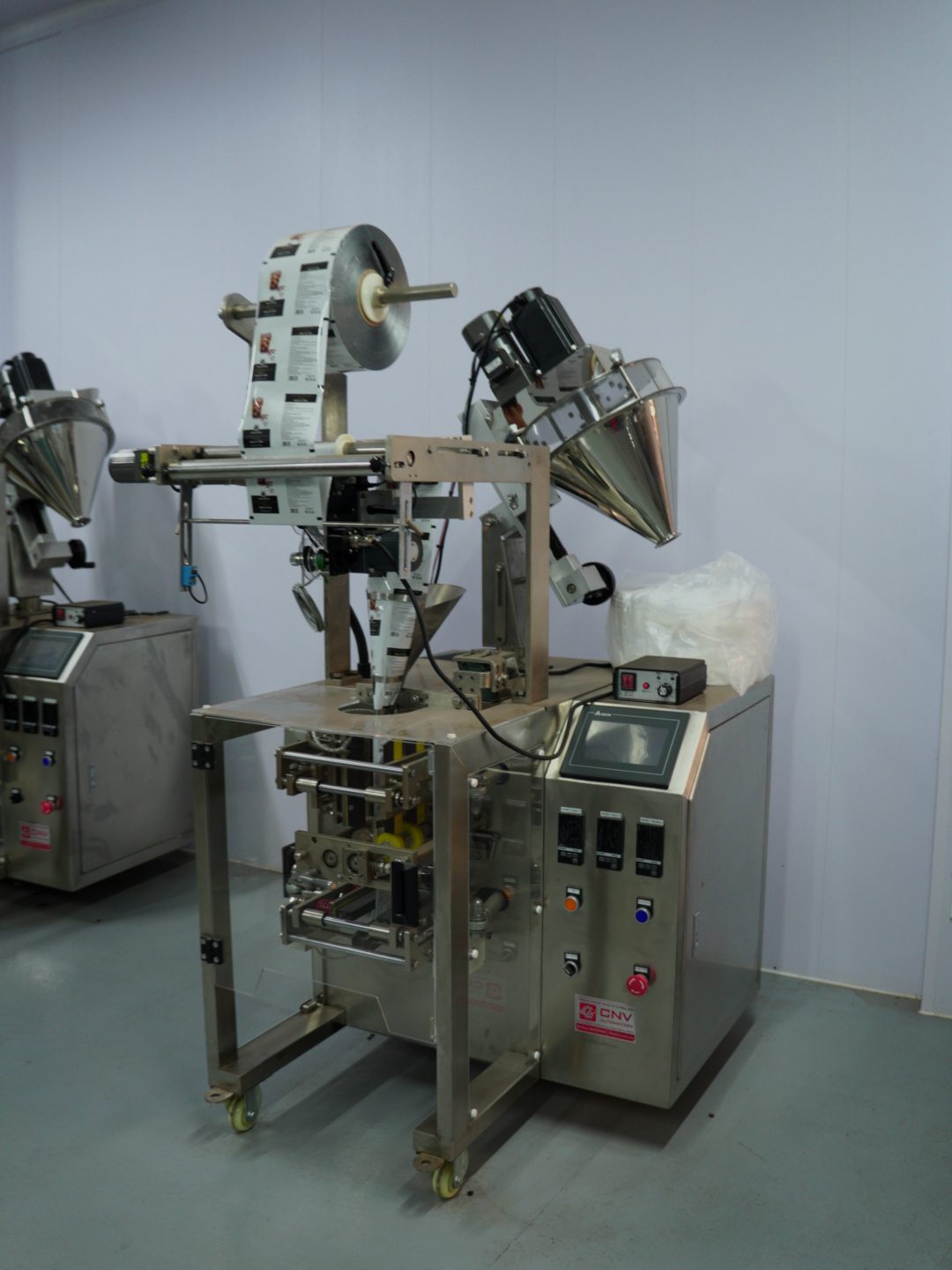
Review photographs, videos and capability information in relation to your proposed product. A roasting machine does not demonstrate capability for every coffee format, and a finished pouch does not identify the packing operator. Where practical, arrange a relevant discussion or production review instead of relying on a general presentation alone.
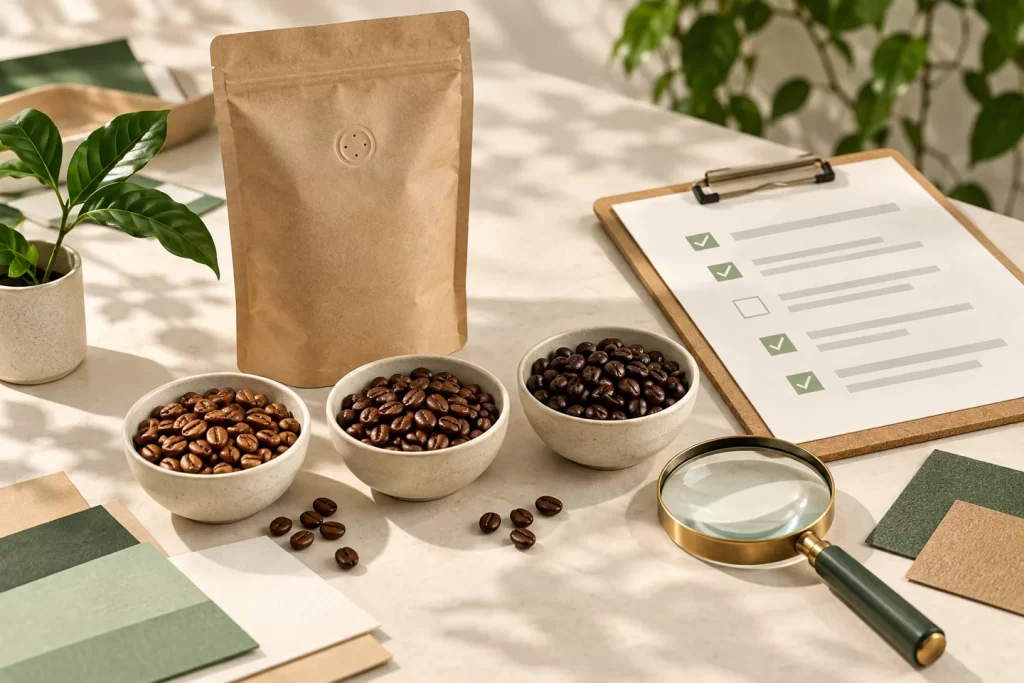
3. Approve samples against the intended use
Test samples using the brewing method and serving context planned for the product. For a café menu focused on milk drinks, tasting only black coffee leaves part of the requirement untested. For retail products, consider how the intended customer will prepare the coffee and what instructions they will receive.
Record conditions as well as sensory comments
Give samples unique references and record the opening date, equipment, recipe and adjustments used during the trial. Separate descriptions of the coffee from judgments about whether it suits your customer. This makes feedback more actionable than a request for a product that is simply “stronger but smoother”.
Maintain a clear approval record
Once a sample is accepted, identify the approved version, product description and agreed assessment criteria. Establish how the production batch will be compared with that approval and who retains the records. A successful tasting does not, by itself, explain how repeat orders will be monitored.
4. Review quality controls and relevant documentation
Ask what documentation applies to the named entity, facility and product under discussion. Check the scope and validity rather than assuming a document covers every product or market. If you need particular testing or destination-market documentation, include the requirement in your brief and obtain a clear response.
Agree on batch identification, packaging checks, label responsibilities and the information to be supplied with the order. Confirm which services and documents are included in the commercial proposal. A general statement about export experience is not a substitute for checking the requirements of your own shipment.
5. Compare quotations on equivalent specifications
A price per kilogram is meaningful only when the underlying product and service scope are comparable. Align the bean specification, whole-bean or ground format, packaging, labels, quantities and delivery assumptions. Record exclusions so that a lower quote is not mistaken for an equivalent offer when it covers less work.
| Assessment area | Information to request | Point to clarify |
|---|---|---|
| Production scope | Owners of roasting, packing and inspection | No clear responsible contact |
| Sample approval | Sample reference, test conditions and approved version | Approval based only on informal comments |
| Quotation | Specification, inclusions, exclusions and validity | Unexplained changes to the quoted scope |
| Schedule | Dependencies on sample, packaging and order approval | Delivery promises before inputs are confirmed |
| Quality feedback | Contact, evidence required and review process | No way to identify the affected batch |
Minimum orders and lead times must be confirmed for the proposed configuration. This article does not publish a universal Springtime MOQ or production schedule. Use the same brief when comparing partners so that differences in their proposals can be understood.
6. Discuss repeat supply and change control
For distributors and café groups, the first order is only part of the assessment. Ask how forecasts, repeat orders and changes to materials or packaging will be handled. Identify which changes require a new sample approval before they reach production.
Keep a record of the product version, packaging and delivery assumptions used for each order. Establish who can approve changes and how those decisions are communicated. An early proposal should not be treated as a permanent commitment when the project conditions have changed.
7. Make the decision using requirements that must be met
Classify each requirement as verified, awaiting information or not met. Important items such as entity identification, a suitable approved sample and a defined quotation scope should be resolved before commitment. A polished presentation should not compensate for missing evidence.
- The product, brewing method and target customer are defined.
- The roles of production and supply partners are understood.
- The approved sample and trial conditions can be identified.
- The quotation describes its scope and applicable conditions.
- Receiving checks, feedback and change responsibilities are agreed.
If several important points remain open, narrow the discussion or agree a limited evaluation before expanding the project. The objective is a supply arrangement that can be operated and checked, not a numerical supplier score built on assumptions.
Frequently asked questions
Should I choose a coffee OEM partner on price alone?
No. Compare equivalent product specifications, service scope and commercial conditions. A lower quotation may exclude work that another proposal includes.
Can I start without an approved coffee formulation?
Yes. Prepare the target customer, brewing method, taste direction and sales channel, then discuss the required development support before requesting a production quotation.
How should a café evaluate coffee samples?
Test them with the intended menu and equipment. Record recipes, conditions, observations and adjustments, and retain a clear reference for the approved sample.
Does a facility certificate cover every coffee product?
Do not assume so. Check the entity, facility, scope, validity and relevance to the product under discussion.
How are minimum orders and lead times confirmed?
They must be agreed for the product, number of SKUs, packaging, sample approval status and production plan. This guide does not publish a universal Springtime MOQ or schedule.
Discuss your coffee project with Springtime
Share your intended product, brewing method, target market, packaging direction and expected volume. Explore Springtime coffee options as a starting point, then confirm the product and service scope for your own project.
Springtime — Different From The Ground Up.