

Private label drip bag coffee manufacturing should begin with the intended customer, preparation method and finished product specification, followed by sample approval and a quotation. Agree the coffee, filter format, fill weight, outer packaging and acceptance checks so both parties are discussing the same product.
For a business launching its own coffee brand, asking only for a price per bag leaves too many assumptions open. A useful quotation identifies the specification and the work included. This guide helps you prepare that discussion without assuming a universal minimum order, price or production schedule.
1. Define the coffee filter format you want
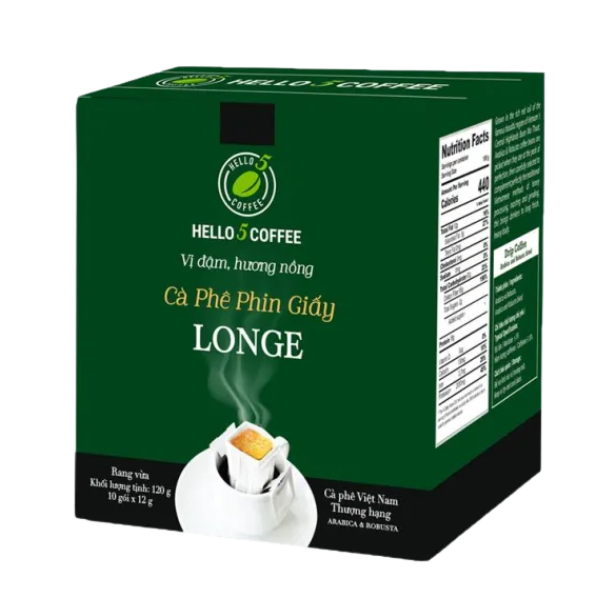
In this guide, filter-bag coffee means roasted ground coffee held in a filter for brewing. Describe the actual format in your enquiry: a hanging drip bag fitted over a cup, an immersion bag or another configuration. A shared product name does not guarantee that the buyer and supplier envisage the same item.
Do not use this as an interchangeable description for instant coffee. If customers expect to stir a product into water and drink it immediately, revisit the product choice before investing in artwork. A photograph or description of the intended preparation steps can clarify the brief.
When discussing the scope of coffee OEM manufacturing, identify who provides the coffee, materials, design and finishing work. If you also need product-development support, explore the private label coffee approach and confirm the available responsibilities.
2. Match the packaging brief to the customer and sales channel
A drip bag concept may be intended for retail, corporate gifting or guests at a hospitality business. Each context raises different questions. Are users familiar with the preparation method? Will the product be distributed as individual bags or sold in boxes? Which instructions must remain visible when a customer receives it?
A gift set needs an assessment of how it opens and how its contents are removed. An online retail product also needs a suitable delivery configuration. These are briefing examples, rather than mandatory specifications for every order.
| Use case | What to specify | What to trial |
|---|---|---|
| Boxed retail | Bag count, variant information and box opening | Can customers identify the product and follow preparation? |
| Branded gifts | Layout, artwork and additional materials | Assembly, removal and transport |
| Hospitality supply | Distribution to guests and instructions | Preparation in the intended setting |
| Distributor supply | Item codes, carton specification and repeat orders | SKU identification, counting and handover |
You do not need to settle every detail before the first conversation. However, distinguish essential requirements from elements that may change after trials. This prevents a minor packaging revision from unexpectedly reopening the whole project.
3. Assess the coffee in its intended bag and preparation
Arabica, Robusta and blend descriptions provide a starting point, but do not fully specify the product. Explain the flavour direction, characteristics to avoid and how the buyer will prepare the coffee. If a reference product is available, identify what is relevant rather than requesting a copy.
Evaluate samples in the intended bag configuration and brewing conditions. Record the water quantity, temperature, preparation time and method used so later trials have a meaningful reference. Any instructions selected for the pack should reflect the performance of the approved product.
Review grind alongside the filter and brewing method. If a sample does not meet the brief, identify which variable the next trial will change. Adjusting the coffee, grind, fill weight and instructions simultaneously makes the feedback harder to interpret.
4. Specify the filter, individual wrapper and retail box separately
List each packaging layer in the finished product brief so quotations cover the same scope. Depending on the project, this may include the filter touching the coffee, an individual outer wrapper, a retail box and a delivery carton. Do not assume that a phrase such as complete packaging includes every layer.
State the fill-weight unit and how it will be checked. For a mixed box, identify whether the contents differ in coffee, packaging or both. Where several designs are involved, distinguish artwork variants from different product specifications so item codes remain clear.
Material choices, compatibility with packaging equipment and label information need appropriate review before approval. Do not infer shelf life from the appearance of a bag or from another product. Shelf life and storage conditions require a basis suited to the actual finished product.
The guide to coffee packaging by sales channel can help structure the discussion. For an export project, separate the destination-market requirements for their own review.
5. Request a quotation for a configuration, not only a quantity
Prepare a short brief before requesting a private label drip bag coffee quotation. If a specification is undecided, explicitly ask for a proposal rather than leaving a blank that suppliers may interpret differently.
- Target customers, sales channel and intended preparation.
- Coffee direction or an existing sample reference.
- Filter format, proposed fill weight and items requiring advice.
- Packaging layers, bags per box and product variants.
- Expected quantity per item, required delivery date and destination.
- Design, printing, sample-development and handover responsibilities.
Ask how the minimum order applies to the proposed configuration and whether its unit is bags, boxes or something else. For multiple SKUs, establish the conditions for each item. Do not assume that the combined project quantity satisfies the minimum for every variant.
Compare what is included, excluded and subject to revision. Use the B2B coffee quotation checklist to keep enquiries consistent before asking different parties for proposals.
6. Approve both the drink and the finished sample
Flavour approval and packaging approval are connected decisions, but one does not replace the other. Record which coffee sample, bag configuration and artwork version have been accepted. Approval of a screen mockup does not automatically confirm every detail of the physical product.
Check opening, bag placement and brewing with a complete sample. Record specific points that make the product difficult to use instead of relying on a general complaint about packaging. Include someone representative of the intended users alongside the purchasing team.
Before production, agree who approves changes, which file is final and which revisions require another review. Use version codes for projects with several items. This makes handover clearer when responsibility moves from product development to purchasing or distribution.
7. Plan receiving checks and repeat orders from the first batch
On receipt, compare item codes, quantities, packaging specifications and the agreed records. Document the condition of bags, boxes and cartons, together with the identification information selected for inspection. Isolate relevant goods when a discrepancy needs assessment and follow the agreed handling process.
For flavour or preparation feedback, retain batch information and the conditions of use. If instructions or brewing conditions change, record the change before comparing results with an earlier approval. The aim is to investigate using evidence rather than assign a cause prematurely.
Reference the approved product, sample and packaging version on repeat orders. If ingredients, artwork or bags per box change, ask how that affects further trials, price and timing. A familiar brand name does not remove the need to confirm revisions.
Frequently asked questions
Is drip bag coffee the same as instant coffee?
They should not be treated as the same product. In this guide, a filter bag contains roasted ground coffee for brewing, while instant coffee has a different preparation method. Specify the intended format before sampling or quotation.
Can I start a project without a coffee recipe?
You can begin with the target customer, flavour direction and intended use. Confirm the available sample-development support, project scope and approval responsibilities with the supplier.
What is the minimum order for private label drip bag coffee?
The minimum order must be confirmed for the coffee configuration, materials, SKU count and packaging specification. Clarify whether the quotation uses bags, boxes or another unit.
Does the quotation include design and outer boxes?
Do not assume these are included. Ask for coffee, filters, individual wrappers, boxes, cartons and any design or printing work to be identified separately in the quotation scope.
How soon can the first batch be delivered?
There is no confirmed universal timeline for every configuration. Agree sample approval, artwork approval, material availability and a proposed delivery schedule before committing to a launch date.
Discuss your drip bag coffee brief with Springtime
Considering a drip bag coffee line under your own brand? Prepare the intended customer, flavour direction, filter format and packaging requirements so the feasible configuration can be discussed. Send your product enquiry to Springtime and confirm the scope of support before finalising the launch plan.