



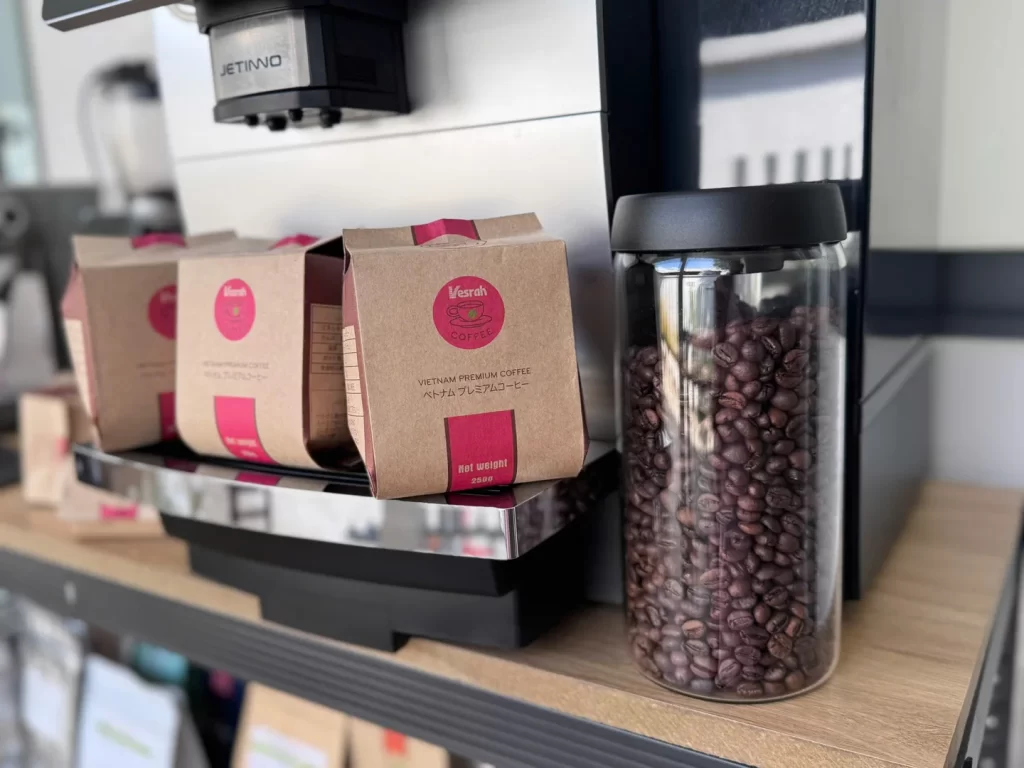
Whole bean vs ground coffee for cafés is a decision about brewing methods, grinder control and daily operations. Whole beans let the team adjust the grind on site; pre-ground coffee removes that task but needs to be tested with the equipment and recipe actually used.
For café owners and F&B purchasing teams, the useful question is which format produces suitable drinks consistently under real service conditions. This guide compares the workflow, operating costs and information to agree with a supplier before ordering.
1. Separate product format from coffee quality
Whole bean coffee here means roasted coffee that still needs grinding before brewing. Pre-ground coffee has been ground before delivery or packing. Ground roasted coffee is different from instant coffee: it still needs an appropriate brewing method.
Neither format alone establishes the quality of the green coffee, roast or blend. A pack described as suitable for machine brewing also needs testing on the intended equipment. When reviewing Springtime coffee options, specify the desired flavour and product format separately.
2. Compare whole bean and pre-ground coffee by workflow
| Decision point | Whole beans | Pre-ground coffee |
|---|---|---|
| Preparation | Needs a suitable grinder or an integrated grinding system | Removes grinding at the counter |
| Grind adjustment | Can be adjusted and tested on site | Ground coffee cannot be made coarse again |
| Staff training | Includes grind adjustment, dosing and cleaning | Still includes dosing and recipe control |
| Product trials | Test with the intended grinder and brewer | Test the exact supplied grind version |
| Opened-stock control | Track opened beans and hopper loading | Track opened grounds and avoid excess preparation |
| Costs to review | Coffee, equipment, dial-in work, cleaning and waste | Coffee format, brewing work and waste from an unsuitable match |
The comparison is a purchasing framework rather than a ranking. Consider the menu, service pace and people who will prepare drinks. Removing grinding does not automatically standardise the remaining steps.
3. Start with the brewing methods on your menu
Semi-automatic espresso service
Grind adjustment is an important part of setting up an espresso recipe. Whole beans paired with a suitable grinder allow the team to make changes on site. If using pre-ground coffee, test it directly: a batch that is too fine cannot be turned back into a coarser grind.
Automatic machines have model-specific ingredient requirements and loading points. Read the manufacturer’s instructions before use, and do not pour ground coffee into a bean hopper. Some models have a separate ground-coffee inlet, but that feature should never be assumed.
Vietnamese phin and filter brewing
Pre-ground coffee may suit a café with an established phin or filter setup and a consistent recipe. Request a sample of the intended grind rather than agreeing only on a broad description such as “phin grind”. Different brewers can require changes to the grind or recipe.
A menu with several brewing methods may need separate grind specifications or product formats. The principle that grind should match the brewing method is also explained in Starbucks’ brewing guide. The café still needs to validate its own recipe on its own equipment.
4. Connect freshness with storage and usage
Grinding close to brewing is a recommended approach to freshness. Buying whole beans and then grinding a large reserve in advance does not preserve that workflow advantage. Decide who grinds, when grinding happens and how the prepared amount will be used.
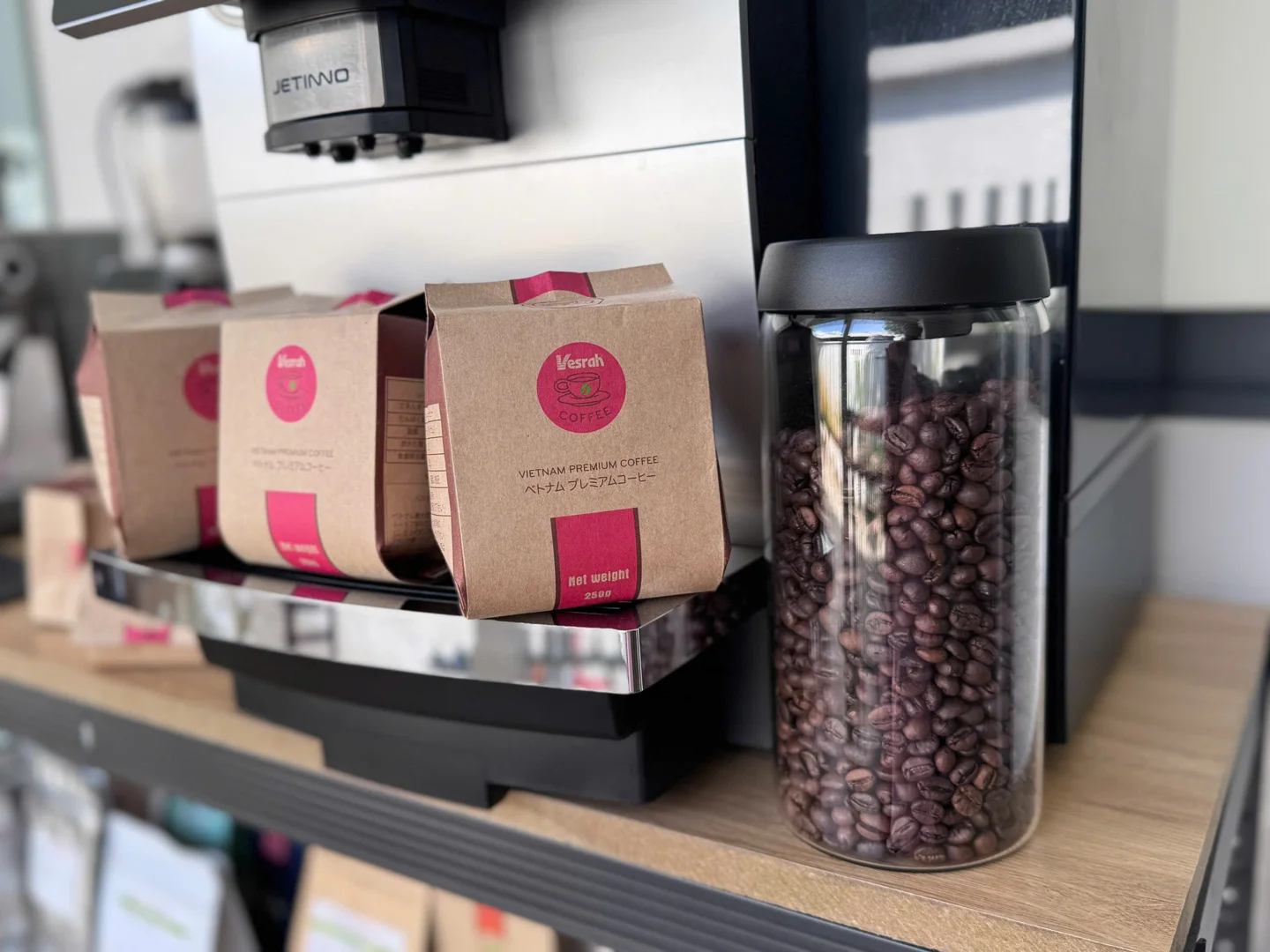
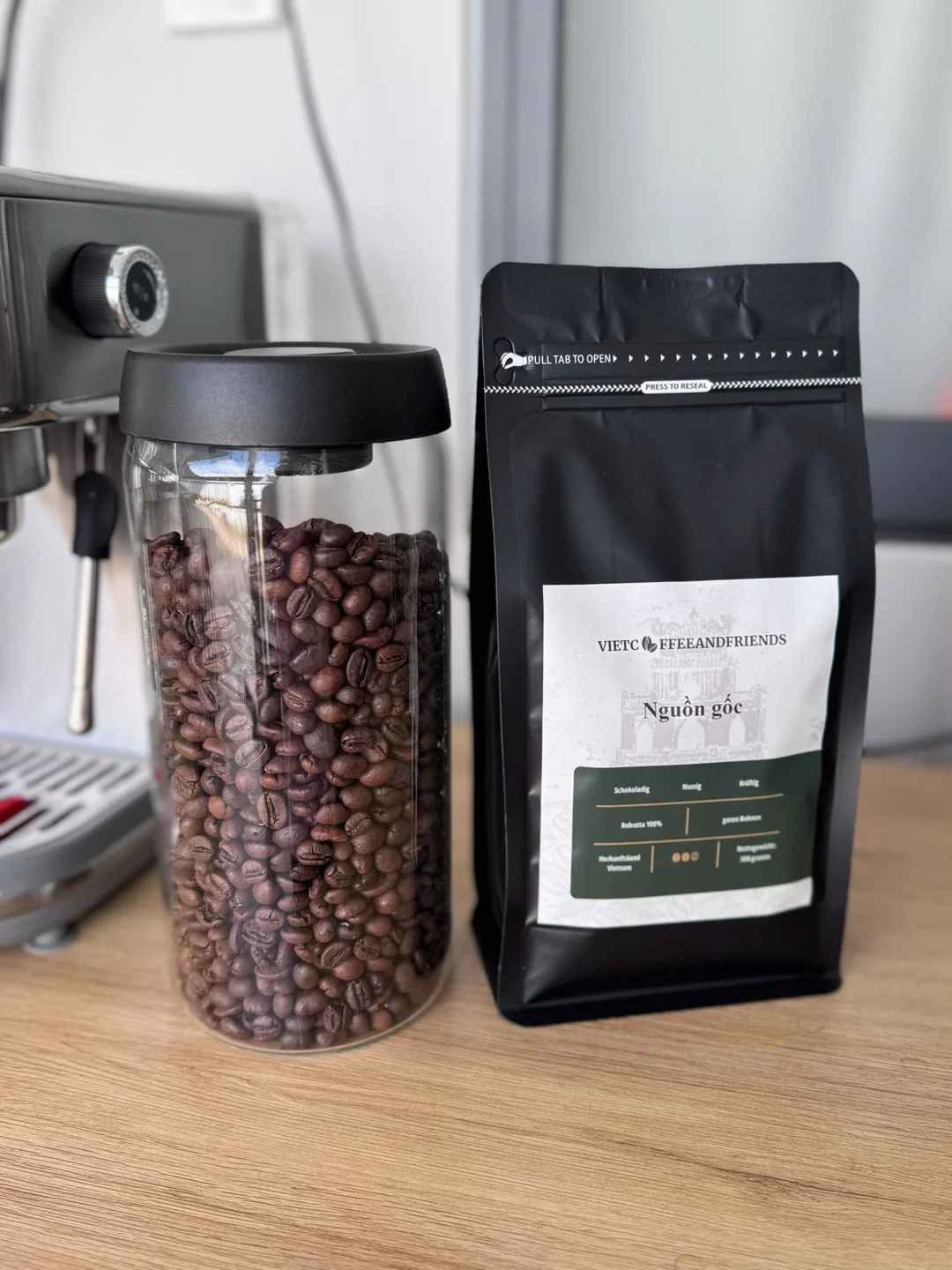
Follow the product’s storage instructions and limit unnecessary exposure to air, light, heat and moisture. Mark the opening date and maintain product identification when transferring coffee to a working container. The glass jars in the photographs are display references, not storage-container recommendations.
No single after-opening period applies to every coffee, package and café environment. Ask the supplier for guidance for the specific product and choose pack size around actual consumption. A larger pack with an attractive price can still be a poor operational choice if it remains open for too long.
5. Compare cost per acceptable drink
Price per kilogram is only part of the operating cost. For whole beans, include grinder use or investment, maintenance, cleaning and coffee used during dial-in. For pre-ground coffee, consider the cost of remaking drinks or replacing stock if the grind does not suit the brewer.
A useful trial calculation is: coffee ingredient cost per acceptable drink = total coffee ingredient cost used in the trial / number of drinks accepted in that trial. Record equipment and labour costs separately to develop the wider comparison. Milk, sweeteners and takeaway packaging belong in the total drink calculation, not in a figure labelled coffee-only cost.
Use measurements from your own service rather than assuming a universal drinks-per-kilogram yield. Dose, menu and remakes change the result. The aim is to identify a format that works consistently, not just the lowest raw ingredient quote.
6. Trial both options before changing the full operation
If you want to isolate the effect of format, request the same coffee and roast in both versions where available. If the bean and ground samples use different blends, describe the exercise as a comparison of two complete supply options. Do not attribute every flavour difference to on-site versus off-site grinding.
- Select representative drinks and define what counts as acceptable.
- Record equipment, recipe, water, operator and sample version.
- Test under normal conditions and a realistic busy-service situation.
- Record flavour, handling time, remakes and coffee waste.
- Agree the chosen option, training responsibility and repeat-order details.
Use the menu-based coffee sample worksheet to keep the review consistent. One successful cup is a useful starting point, but the team also needs to reproduce it during service.
7. Give the supplier an actionable brief
Include drinks, brewing methods, machine models or manual brewers, required coffee format, pack size and repeat-order procedure. For pre-ground coffee, retain an approved sample reference or grind-version record. For whole beans, clarify who supports recipe setup and which adjustments the café will manage.
If the coffee and counter setup need to be considered together, discuss brewing equipment for the café model. For a branded product programme, review the private-label development scope and confirm format availability for the actual project.
Frequently asked questions
Should a new café choose whole beans or pre-ground coffee?
Choose according to brewing methods, equipment and operating capability. Whole beans with a suitable grinder allow on-site adjustment; a fixed brewing workflow may be suitable for a tested pre-ground option.
Is pre-ground coffee the same as instant coffee?
No. Pre-ground coffee in this guide is roasted coffee that has been ground and still needs brewing with an appropriate method.
Can one grind be used for both espresso and Vietnamese phin brewing?
Do not assume one grind will suit both. Test each brewer with its actual recipe and confirm the corresponding grind requirement.
Are whole beans always cheaper for a café?
Price per kilogram is insufficient to decide. Compare coffee cost per acceptable drink alongside equipment, labour, dial-in work and actual waste.
What should a buyer tell a pre-ground coffee supplier?
Provide the brewing method, machine model or brewer, current recipe, flavour requirements and pack format. Approve a sample and retain its grind-version reference.
Discuss a coffee format for your café with Springtime
Still comparing whole beans and pre-ground coffee? Share your menu, equipment and service workflow so Springtime can discuss a suitable product option. Contact Springtime about café coffee before finalising the coffee and pack configuration.