



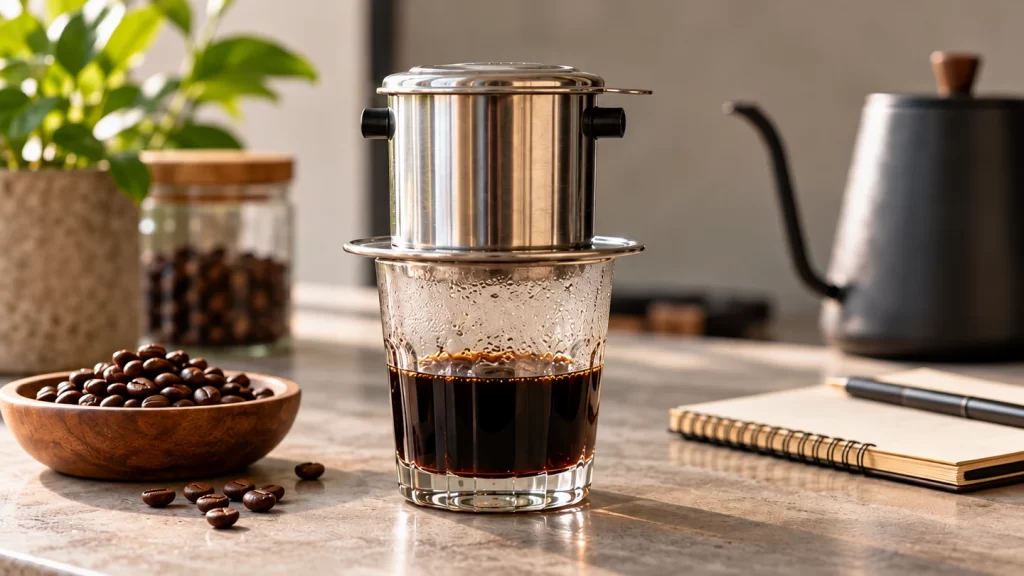
Wholesale phin coffee should be selected in the drinks your café actually sells, using its own brewer and service method. A kilogram price becomes useful only after you know which sample meets the intended result and how much coffee the recipe uses.
Start with the main menu items, available equipment and service rhythm. Then test samples, compare costs and agree the order format rather than choosing from a general promise of a strong flavour.
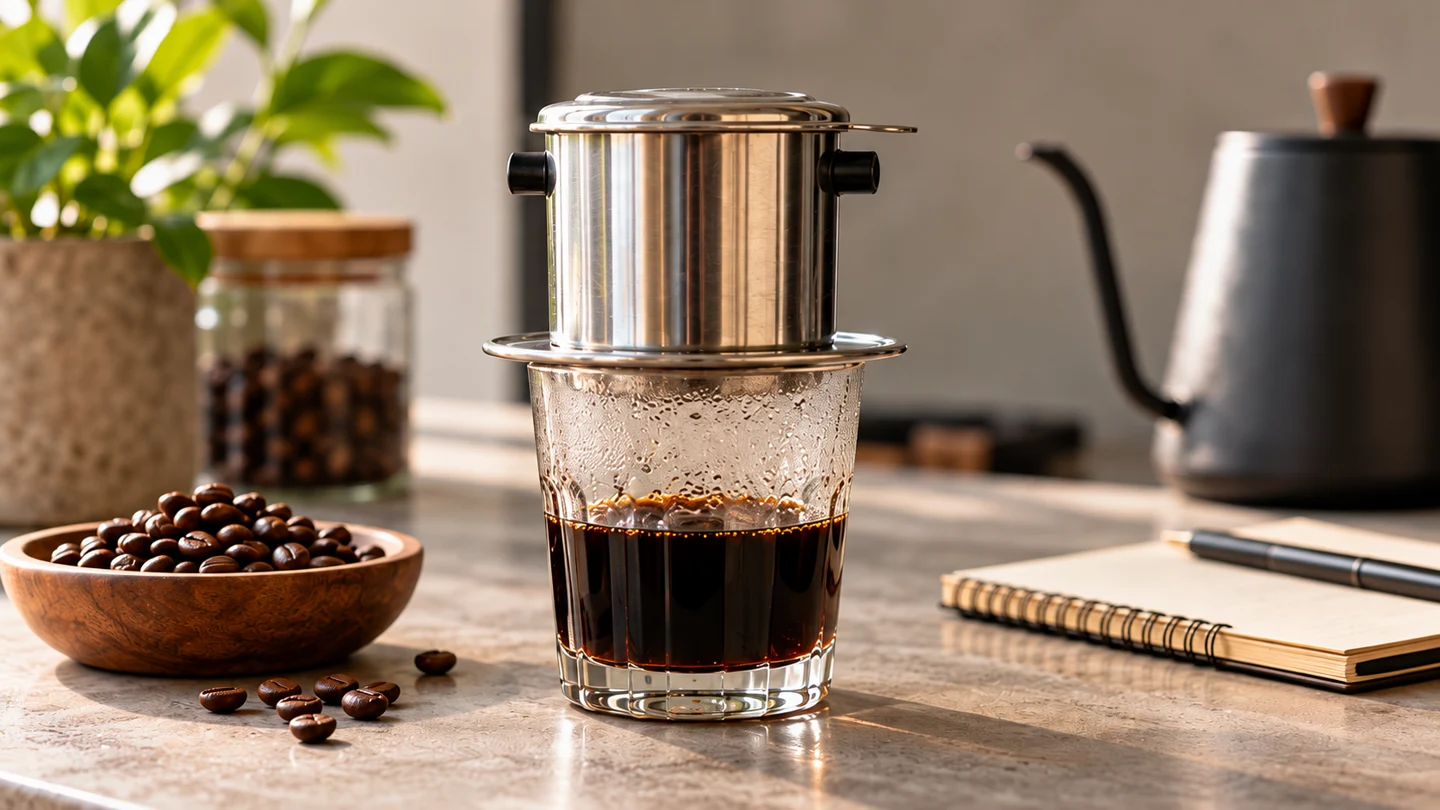
Define service before choosing the coffee
Individual phin service and batch preparation create different operating requirements. If coffee is prepared before a busy period, assess the finished drink after the café’s actual holding and service workflow, not only a freshly brewed concentrate.
Record the brewer, trial dose, water and whether the drink is served with milk or ice. Keep these conditions consistent when comparing samples, and identify who brews, approves and trains the other shifts.
Choose beans or grounds for the actual setup
Whole beans require a team able to grind and control preparation. For pre-ground coffee, agree the intended brewer and assess the grind through trials; “ground for phin” alone does not establish compatibility with every brewer.
This article does not prescribe a universal grinder number or phin recipe. Keep a record of the approved sample, preparation method and changes tested. Compare whole bean and ground formats if equipment is part of the decision.
Test finished drinks, not concentrate alone
A sample preferred as black coffee may behave differently in the café’s milk-and-ice recipe. A product selected for iced milk coffee also needs a separate assessment if the menu includes black coffee.
| Trial drink | Keep consistent | Record |
|---|---|---|
| Hot black coffee | Brewer and agreed preparation | Aroma, taste and finish against café criteria |
| Iced black coffee | Concentrate, ice and service | Result in the complete drink |
| Iced milk coffee | Coffee, milk and ice recipe | Fit for the target customer |
| Batch service | Agreed preparation workflow | Repeatability and busy-period operations |
Use sample codes and specific feedback. If a recipe needs adjusting for a sample, record both the change and its cost rather than treating the new drink as directly comparable to the old trial.
Compare equivalent quotation terms
Request a product identity, beans or grounds, net weight and order quantity. Convert pack and kilogram prices to the same basis before comparing, and separate taxes, freight and any support actually included.
For the coffee ingredient alone, multiply the kilogram price by grams used in the approved trial and divide by 1,000. This is a unit conversion, not a Springtime price or recommended dose. Total beverage cost includes the other ingredients and relevant café expenses.
Check repeatability between shifts
The person operating the counter should reproduce the approved trial. Different preparation between shifts can create problems that a supplier change alone will not fix.
Keep a short operating record of the product, brewer, approved recipe and person responsible for adjustments. When a problem is reported, start with batch information, storage and preparation details before assigning a cause.
Order around consumption and storage
Estimate demand from cups, dose and trading days. A new café should label forecasts as estimates and revise them when actual sales are available. Monthly consumption is not automatically the right quantity for a single delivery.
Discuss packs and delivery rhythm against the available storage and confirmed supplier conditions. Review café ordering and inventory planning before increasing stock merely to obtain a lower pack price.
Before the first order
- Describe the core drinks and preparation.
- Test samples in complete drinks.
- Choose beans or grounds for the operating capacity.
- Record the recipe and approval owner.
- Compare equivalent packs, taxes and delivery.
- Agree reorder and feedback contacts.
For broader sourcing, see wholesale café coffee by menu and volume. Springtime prices, minimum quantities and delivery conditions require separate confirmation.
Frequently asked questions
Should wholesale phin coffee be Robusta or Arabica?
Do not decide on the species name alone. Test the product or blend in the main drinks and compare costs using the approved recipe.
Does a phin café need a grinder?
A suitable pre-ground supply can be discussed. Whole beans require equipment and responsibility for grinding and adjustment.
Can one coffee serve black and milk drinks?
Test the shared-product option in each drink separately. A black-coffee result does not establish suitability in a milk recipe.
Is there a universal Springtime phin price?
This article does not publish fixed prices or minimum quantities. Confirm the product, pack and café requirements individually.
Discuss your requirements with Springtime
Send the intended application, product, pack format, forecast quantity and receiving point through the Springtime contact page. These details support a discussion of scope, feasibility and conditions before a quotation is agreed.