

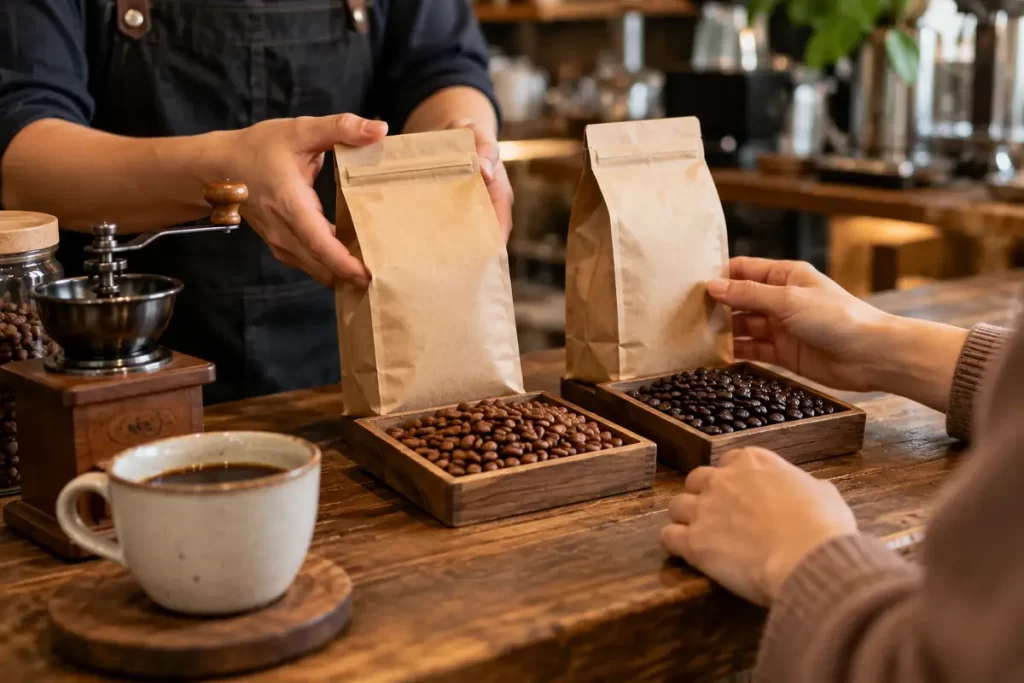
When a café group, distributor or importer looks for a coffee supply partner, the choice is often between buying an existing wholesale product and developing coffee under a private label. “Wholesale vs private-label coffee” is not a choice with one universal winner. It depends on the brand you want customers to see, the work your team can manage and how much product differentiation your channel needs.
Wholesale coffee usually means selecting products from an existing supplier catalogue and reselling or using them in your business. Private-label coffee is sold under the buyer’s brand, with product, packaging and label scope agreed with the manufacturer. The amount of customization varies by supplier and project, so confirm what uses an existing specification and what requires new development. See SpringTime’s private-label and ODM coffee service and this guide to OEM vs ODM coffee.
Wholesale coffee and private label: what changes?
The key difference is the commercial role of the product. With wholesale supply, the buyer can focus on choosing a suitable item, selling it through the right channel and managing customer service. With a private label, the buyer also takes responsibility for building and maintaining its brand presentation. The manufacturer may support product and packing decisions within an agreed project scope.
| Decision area | Wholesale coffee | Private-label coffee |
|---|---|---|
| Brand on pack | Usually an existing supplier or product brand | Buyer’s brand, subject to an agreed label scope |
| Product selection | Choose from available catalogue options | Use an existing specification or develop against a brief |
| Packaging | Typically existing pack formats | Pack format and label content need review and approval |
| Buyer’s work | Assortment, channel, merchandising and sales | Brand brief, approvals, packaging and repeat-order controls |
| Items to confirm | Available products, pack size, quote and supply terms | Customization scope, sample approval, artwork and responsibilities |
When wholesale coffee can be the practical starting point
Wholesale can suit a business that needs to add coffee to an assortment, test a new channel or serve customers without first building a separate product identity. A distributor may want to see which roast styles, formats and pack sizes get repeat interest before assigning resources to its own brand. A café can also compare an available coffee against its equipment, recipes and service workflow.
Before ordering, confirm the product format, whole bean or ground option, pack specification, storage guidance, lot information and the process for reordering. For café use, evaluate the coffee on the actual machine and recipe. Record the tasting reference and brew method so the team can assess consistency over time. For a coffee range developed around preparation needs, see how to develop a coffee blend for a brewing method.
When a private-label coffee line may fit better
Private label may be worth evaluating when a business wants a product identified with its own brand, a distinct assortment for a customer segment or a consistent offer across stores and retail channels. It can give a distributor a product story of its own, but it also adds coordination: someone must own the brief, review packaging, approve samples and keep the approved version on file.
Start by documenting the target customer, sales channel, product role, sensory direction and packaging needs. Ask the supplier to separate what can be selected from existing options from what needs development. Agree how samples will be reviewed, who approves the final pack and what changes require a new approval. A first-order checklist can help: approving a first private-label coffee batch.
Compare the two models against your operating capacity
1. Which brand should the buyer see?
If the immediate priority is to sell a ready product through a known catalogue, wholesale may be the simpler fit. If the business is investing in a customer-facing brand and wants its name on the coffee, private label is more relevant. Confirm ownership and permitted use of artwork, product names and label content in the commercial agreement.
2. Can the team manage product and packaging approvals?
A private-label project needs an accountable person to prepare the brief, review proofs, check label information and control artwork versions. A narrow first range can keep the workload manageable. Wholesale still requires product selection and sales planning, but the buyer may have fewer packaging decisions to coordinate.
3. Is demand clear enough?
Look for evidence from customers, stores, enquiries or distributors before committing to a differentiated offer. If demand is uncertain, available products can help test a channel. If you already see recurring demand for a specific profile or format, a private-label brief can define what should be developed and why.
4. Can you repeat the approved specification?
For either model, keep the product name, pack configuration, tasting reference, approved artwork and ordering contact together. When a product or material changes, document the revision and effective date so both parties know which version applies. This record is especially useful when a label has multiple sizes or market variants.
A hybrid route: test, learn, then build a brand
Some businesses start with an existing wholesale product to learn about channel demand, then decide whether a private-label range would add value. This can make the later brief more specific: the business has observations about customers, format, price positioning and repeat purchase. The decision should be based on sales evidence and operational readiness rather than the desire to launch a logo quickly.
Before moving between models, compare the coffee profile, format, pack size, customer information and staff guidance. Decide whether the existing product will be replaced, sold alongside the new line or reserved for a different channel. If you need contract production under an agreed brand scope, review coffee OEM manufacturing and discuss the project requirements with the supplier.
Supplier checklist before requesting a quote
- Available catalogue products and formats relevant to your channel.
- Who owns the brand, label copy and artwork, and how usage rights are agreed.
- The brief, sample review, approval and change-control process.
- Product specifications, storage guidance and lot documents the supplier can actually provide.
- Price, minimum order quantity if applicable, expected lead time and delivery terms for the selected configuration.
- Who handles a mismatch between delivered coffee or packaging and the approved reference.
Do not assume price, MOQ, production timing, certification or customization from a general service description. Ask for the details to be confirmed in writing for the product, destination market and order configuration.
Frequently asked questions
Can wholesale coffee be sold under my own brand?
Do not relabel a product or represent yourself as the brand owner without permission. Ask the supplier whether a private-label arrangement is available and agree the packaging and usage scope.
Does private label always require a new coffee formula?
No. A project may use an existing specification or call for development against a brief. The available options and any related costs should be confirmed for the specific project.
Should a small café choose wholesale or private label?
Start with the business goal: do you need coffee for daily service and a market test, or are you ready to build a named product line? Compare the workload, inventory and level of control your team can sustain.
What should I send a supplier to discuss private label?
Share the target channel, customer, product format, pack needs, brand objective and questions that need confirmation. You can contact SpringTime to discuss the requirements.
Conclusion
Wholesale coffee can let a business focus on selling an existing product, while private label is relevant when brand ownership and product coordination are part of the plan. Compare both options against customer demand, team capacity and the work required to repeat an approved specification. Confirm commercial details and responsibilities in writing before placing an order. To discuss a specific sourcing or private-label brief, contact SpringTime.