

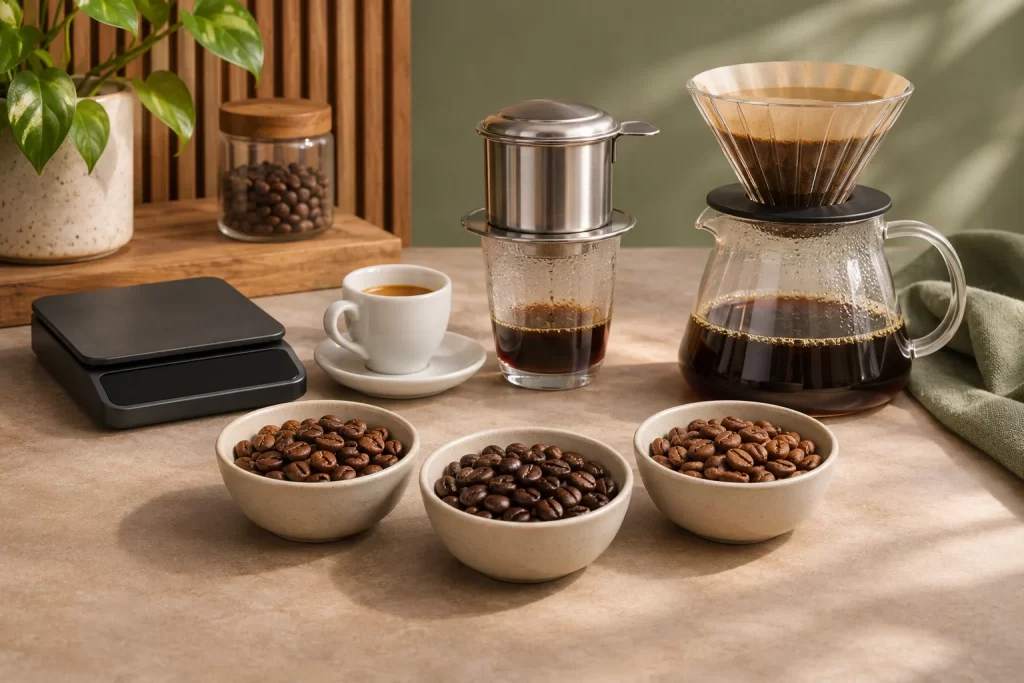
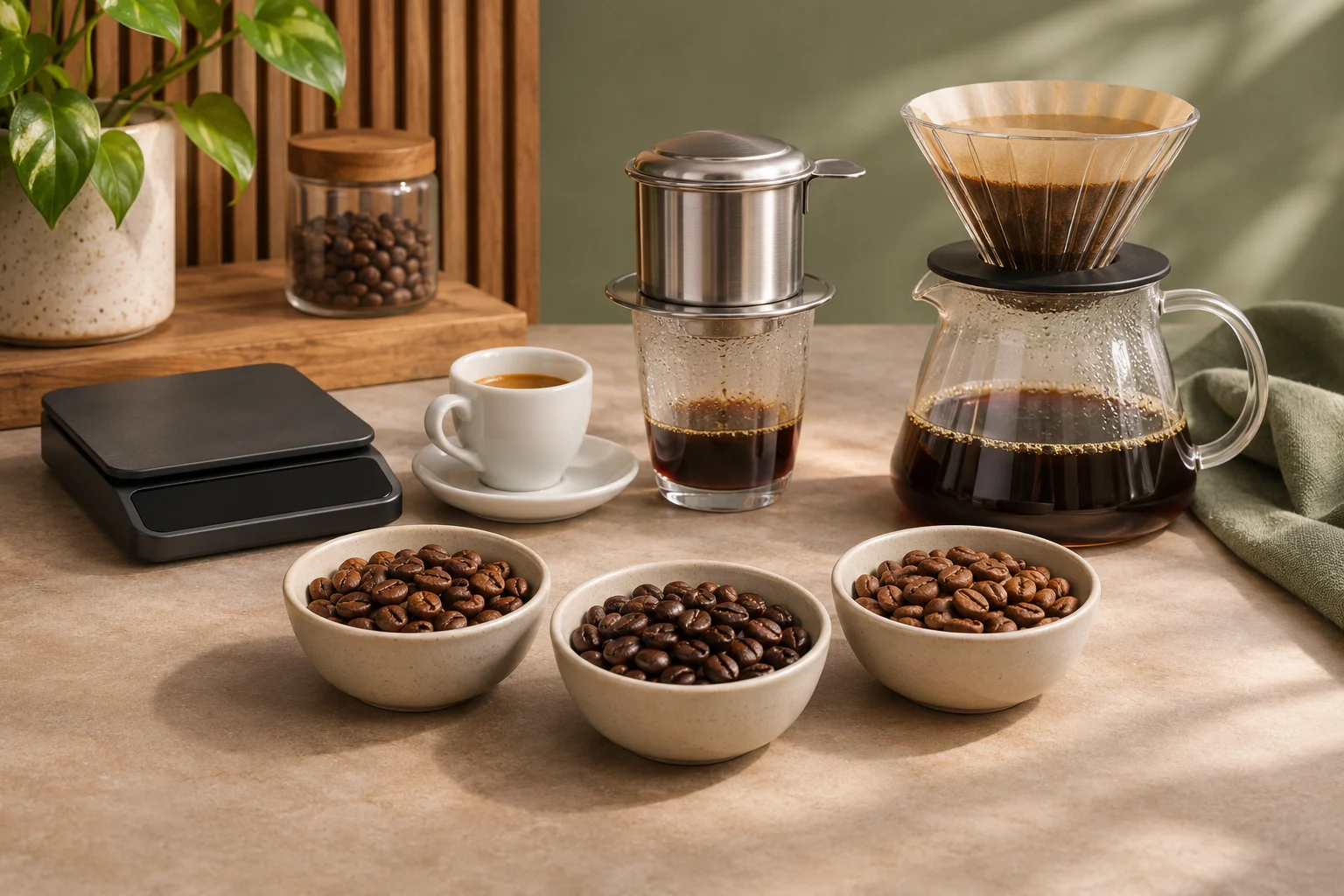
Develop a private-label coffee blend around the brewing method and finished drink you want to serve, then evaluate coffee, roast and blending options through samples. Use comparable test conditions, record specific feedback and approve an identifiable version before confirming production. There is no universal blend ratio for every coffee brand.
This guide explains how to organise a B2B blend-development project rather than prescribing an untested recipe. If you need help choosing a product platform and adapting it for your brand, discuss SpringTime’s ODM and private-label coffee scope before requesting samples.
Define the application before choosing a blend ratio
An espresso served black, a milk-based drink and a Vietnamese phin coffee are different evaluation settings. Select the main application for the first trial and describe the intended customer. Feedback that a coffee is not strong enough becomes more useful when it identifies the drink being assessed.
Do not choose an Arabica/Robusta percentage solely from an assumed market position. Describe the desired outcome, a reference sample if available and what you want to avoid. A partner can propose options, but the business still needs to evaluate actual samples using the agreed preparation method.
| Application | Include in the brief | Keep comparable during evaluation |
|---|---|---|
| Espresso | Black or milk-based menu; intended equipment | Recipe, water, equipment and operator |
| Vietnamese phin | Brewer type, hot or iced service, with or without milk | Coffee dose, water, preparation and service |
| Filter brewing | Brewer, service scale and flavour direction | Recipe, equipment, water and test setting |
| Several methods | Priority use and minimum requirements for each drink | Separate records for each application |
Turn sensory preferences into answerable questions
Words such as aromatic, bold, smooth or premium do not fully define a sample-development task. Describe the observations that matter: is the acidity enjoyable, does the mouthfeel suit the drink, and what should change in the finish? Assess a milk-based drink in its finished form rather than inferring the result only from an espresso tasted separately.
A reference sample supports communication but does not replace a written target. Identify what to retain, what to change and which requirement has priority. When several characteristics need attention, select the most important question for the first round rather than sending conflicting instructions.
Use the private-label coffee product brief checklist to bring together the customer, sales channel, brewing method and questions still requiring advice.
Separate product differences from preparation changes
Record the test conditions
For each sample, retain its reference, supplier-confirmed details, test date and preparation recipe. Apply the same evaluation method to samples being compared. Record changes in water, equipment or technique so a difference in the drink is not automatically attributed to the blend.
If you need to optimise the brewing recipe, organise a separate round and document it. Changing both coffee and preparation without records makes it difficult to identify what solved the problem or repeat the result later.
Collect individual feedback before group discussion
Ask participants to record observations independently before combining their conclusions. Sample codes can help reduce expectations attached to a product name. The purpose is to choose a suitable product and explain revisions, not to turn an internal trial into a scoring competition.
A feedback record for each blend-development round
| Field | Record |
|---|---|
| Sample and version | Sample code, development round and relevant dates |
| Application | Drink, equipment, recipe and operator |
| What works | Specific observations to retain |
| What needs revision | Observation, context and priority |
| Decision | Approve, retest a defined change or do not select |
| Approval owner | Authorised person and accepted version |
For example: “This sample suits the milk drink, but its finish when served black does not match the trial group’s preference; review the priority application.” This is more useful than “not good enough”, while avoiding an unsupported conclusion that a particular ingredient or ratio must change.
Approve the blend alongside production and packaging scope
Before ordering, confirm the sample reference, whole-bean or ground format, intended use, packaging and comparison criteria. “The same as yesterday’s sample” is insufficient when two teams may hold different versions. Link the accepted sample to the relevant order specification.
If ingredients, roast, blend or pack format change after approval, agree what needs checking again. Use the ODM customisation scope checklist to allocate product, material and approval responsibilities. Review the OEM process from sample to handover when moving to production confirmation.
Repeat the approved version, not just the product name
Keep reference samples under agreed conditions and retain a history of accepted changes. Before reordering, confirm the version, volume, product form and materials. Feedback from a café or distributor should identify the batch and how the product was used.
Approval for one application does not establish suitability for every menu. Test a new sales channel in its intended setting before adding stock codes. Sample terms, MOQ, price and scheduling require project-specific confirmation from SpringTime.
Frequently asked questions
Can development start without a blend ratio?
Start with the application, customer, flavour direction and a reference if available. Identify the ratio as an area requiring advice, then evaluate proposed options through actual samples.
Can one blend serve espresso and phin brewing?
Evaluate both methods and identify the priority use. A good result in one method does not establish suitability for the other.
Does changing whole beans to ground coffee need another review?
Confirm the grind requirement for the application and which checks must be repeated. Keeping the product name does not replace approval of the revised configuration.
Is a selected blend automatically exclusive?
No exclusivity should be assumed from sample selection or an OEM/ODM label. Clarify permitted use, relevant rights and any exclusivity arrangement separately.
Discuss a private-label coffee blend with SpringTime
Prepare the main brewing method, menu or sales channel, target customer, flavour direction and support required. Send SpringTime your blend-development brief to clarify the sample scope and a suitable next step.
After approving the reference sample, use the first private-label coffee batch approval checklist to compare delivered goods and document handover differences.