



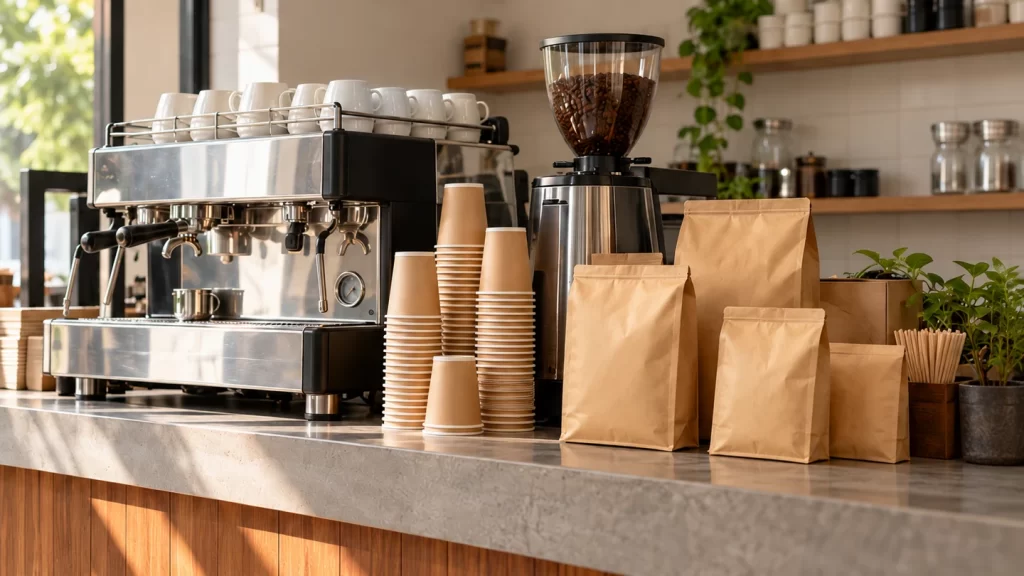
Coffee for takeaway cafés needs to fit the menu and the actual service workflow. A pleasing introductory sample is insufficient if a compact counter is difficult to operate, staff cannot reproduce recipes or supplies run short during busy periods.
For carts and takeaway counters, define a focused menu, brewing method and replenishment plan before requesting wholesale coffee. This guide does not promise sales, investment returns or a universal serving capacity.
Define core drinks and peak demand assumptions
List the intended menu and preparation methods. Espresso and phin require different workflows; if both are offered, test each rather than assuming one configuration covers every action.
Record expected busy periods and responsibility for taking orders, preparing drinks and handoff. For a new location, these remain operating assumptions to test rather than proven demand.
Match coffee with equipment and space
A grinder-equipped counter needs responsibility for adjustment. A pre-ground supply requires the brewing method and grind to be agreed. Do not select ingredients separately from the equipment and operating plan.
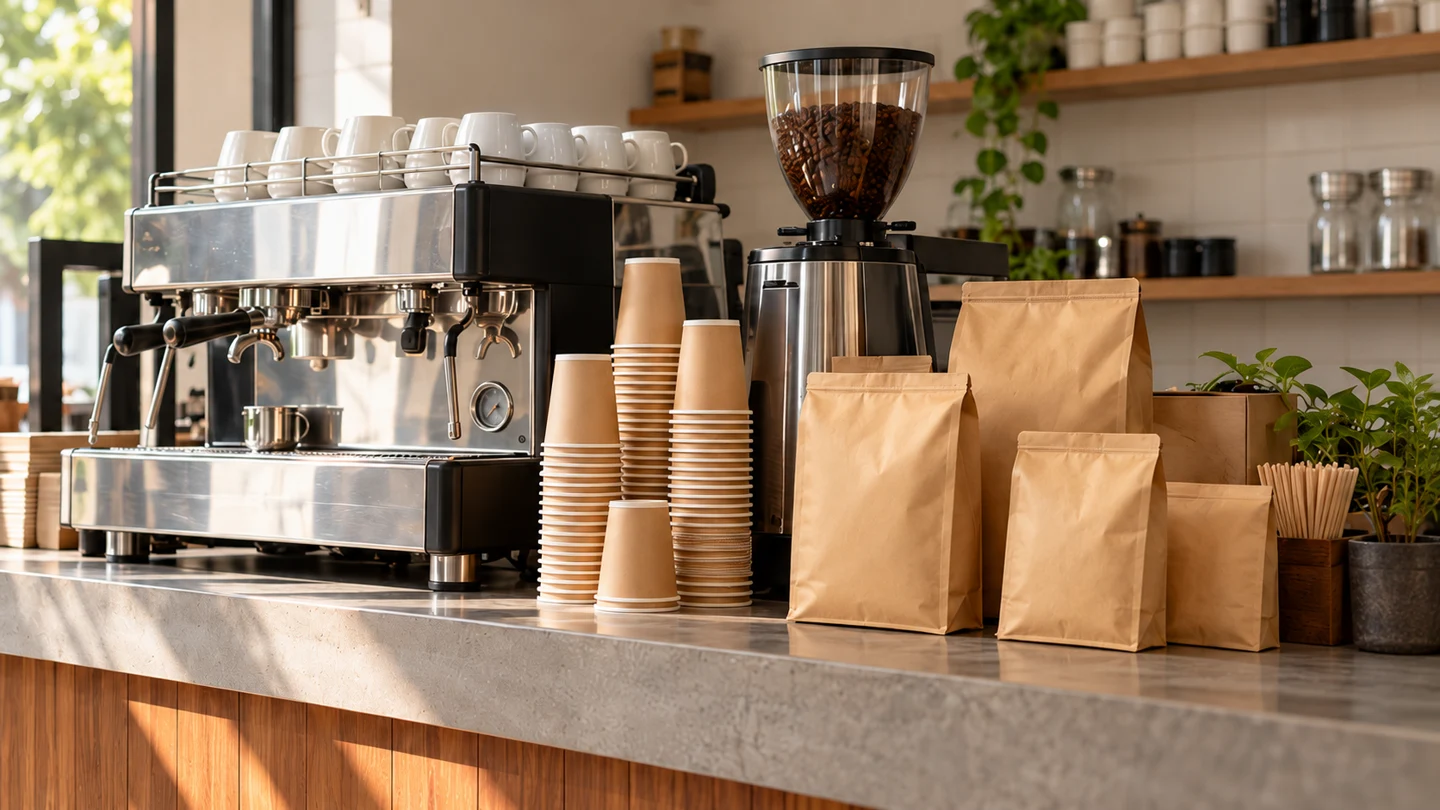
Review machine placement, power, water, tools, waste and ingredient positions. A reference-counter photograph does not establish suitability for every site.
| Setup | Clarify | Trial |
|---|---|---|
| Espresso with whole beans | Machine, grinder and adjustment owner | Consecutive orders from the actual menu |
| Phin service | Brewer and preparation | Complete drinks with milk or ice |
| Batch preparation | Workflow and responsibilities | The intended service procedure |
Assess brewing equipment together with the coffee range. Confirm capabilities for the particular equipment model.
Evaluate takeaway drinks
Use the intended cups, milk, sugar, ice and handoff method. If transport experience is part of the assessment, define and record trial conditions rather than tasting only at the counter.
Identify the drink, sample, recipe and specific feedback. Do not simply reduce the dose to reach a target cost if the drink no longer meets the intended customer requirement.
Rehearse consecutive service
Run the sequence from order-taking to drink handoff before opening. Observe waiting, unnecessary movement and task changes caused by equipment or tool placement.
Include coffee, milk, ice and consumable replenishment. The aim is to find and correct bottlenecks, not turn a brief rehearsal into a guaranteed sales capacity.
- Are orders communicated clearly?
- Can each shift follow the same recorded recipe?
- Are replenishment products correctly identified and positioned?
- Who checks the drink before handoff?
- How will errors or shortages be handled?
Cost the drink and record waste
Separate the coffee ingredient cost from total beverage costs. Milk, sugar, ice, cups, lids and channel-related expenses need actual operating data, not only the kilogram price.
Track trials, calibration and remakes separately. Use records to distinguish purchase-price issues from recipe, workflow or stock problems. Avoid assuming a universal loss rate. Review wholesale café sourcing for equivalent quotation comparisons.
Replenish a compact counter
Forecast each coffee line and core consumable. Replace opening estimates with real usage and avoid stocking an unnecessarily broad range where storage is limited.
Confirm packs, delivery terms and reorder contacts. Do not assume immediate delivery or returns for slow-moving goods. Use café ordering and inventory planning to organise replenishment.
Prepare a supply brief
Send the menu, brewing method, equipment, receiving location, forecast use and sample objectives. Identify assumptions that are not yet an approved configuration.
Springtime prices, minimum quantities, equipment or guidance support and delivery times require individual confirmation. This article does not guarantee business results or a payback period.
Frequently asked questions
Should a coffee cart use beans or grounds?
That depends on equipment and staff. Test either format with the actual drinks and operating procedure.
Is a sample tasted at the roaster enough?
Evaluate it with the outlet’s own equipment, recipe, cups and service method before choosing.
Does cheaper coffee per kilogram reduce drink cost?
Calculate from the suitable recipe, other ingredients and recorded waste. The kilogram price alone is insufficient.
Does Springtime include machines or immediate delivery?
Support scope and delivery timing require confirmation in a specific proposal.
Discuss your requirements with Springtime
Send the intended application, product, pack format, forecast quantity and receiving point through the Springtime contact page. These details support a discussion of scope, feasibility and conditions before a quotation is agreed.