

Coffee bags with one-way valves should be selected as part of a complete packaging configuration. A valve is not a stand-alone shelf-life guarantee: buyers need to review the product, pouch material, sealing process and intended use together.
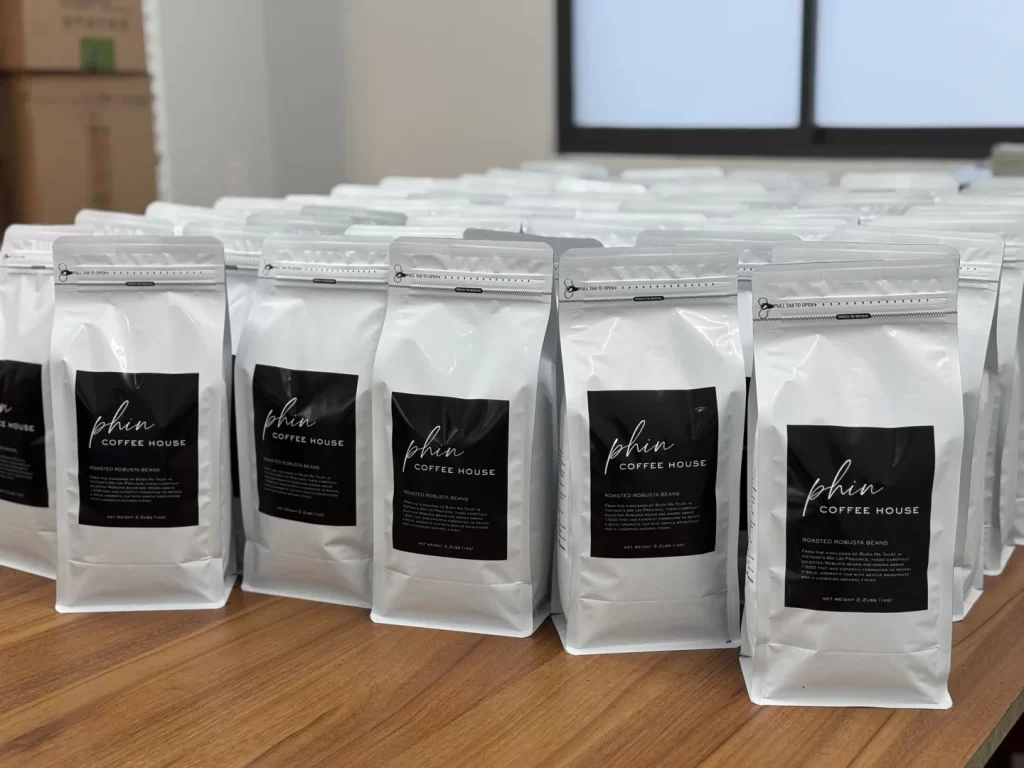
The featured image illustrates coffee packaging from the Media library. It does not show valve detail or establish the technical specification of the pouch.
What does the valve do?
Wipf’s WICOVALVE technical information describes a valve that allows gas to leave while restricting air entry. Roasted coffee can release CO₂ after roasting, so valve selection should be considered alongside the product and packing process.
When discussing coffee OEM manufacturing, request the complete packaging specification rather than simply “a bag with a valve”. Similar-looking bags need not offer identical performance.
Valve, zipper and seal are different elements
| Element | Question to ask | Avoid assuming |
|---|---|---|
| One-way valve | Which model, location and integration method are proposed? | A fixed shelf-life extension from adding a valve |
| Zipper | Is reclosing convenient for the customer? | A zipper replaces the original sealed closure |
| Heat seal | How will the process and sample checks be agreed? | Good appearance proves package integrity |
| Pouch material | Who supplies the material specification? | Matching colours mean matching structures |
Describe the product before requesting a quotation
State whether the coffee is whole bean or ground, the intended pack format, sales channel, use pattern and relevant storage or distribution conditions. Different applications within a business coffee range can require different packaging decisions.
For a private-label project, agree who supplies the pouch, approves artwork and checks compatibility with packing equipment. Resolve these responsibilities before printing.
A practical supplier discussion checklist
- Specify the configuration: intended dimensions and fill weight, base format, zipper, valve and seal areas.
- Review documentation: request material and valve information, plus evidence appropriate to the destination market. Check that documents apply to the proposed configuration.
- Inspect complete samples: review interference between the valve, label, folds and customer handling.
- Run a packing trial: record handling on the actual equipment and refer unusual findings to the technical team.
- Approve a recorded version: retain the sample code, artwork revision, date and named approvers.
Specialist performance checks should be carried out by a competent party using requirements appropriate to the product. A visual inspection or hand squeeze is not a substitute for technical assessment.
Do not infer shelf life from the valve alone
Shelf life needs suitable supporting data for the actual product and packaging configuration. This guide does not give a universal number of months for valve bags.
If material, valve supplier or sealing conditions change, ask the quality team what needs reassessment. Keep unresolved items visible in the brief for a coffee private-label project rather than filling gaps with generic online specifications.
What should the approval record contain?
| Area | Record |
|---|---|
| Identification | Product and pouch codes, artwork version and approval date |
| Configuration | Agreed material, valve model, zipper and dimensions |
| Trial | Filled samples, evaluation scope, findings and open issues |
| Responsibility | Artwork, technical and quality approvers; change contact |
| Order | Quantity, timing and price from the confirmed quotation |
Frequently asked questions
Does every valve bag need a zipper?
No. The two components address different needs. A zipper decision should reflect how customers open and use the product.
Can whole bean and ground coffee share a pouch?
Assess suitability for each product and packing process. Similar bag capacity is not enough to establish compatibility.
Can the valve be chosen after artwork is printed?
Coordinate valve position with artwork, labels and seal areas during sample approval to avoid conflicts.
Is there a fixed SpringTime packaging price?
Price, quantity and timing need confirmation for the project configuration. This article does not publish a standard offer.
Prepare your packaging brief with SpringTime
Send the coffee format, intended pack, current sample and sales channel through SpringTime’s contact form. The team can discuss the requirements that need clarification before proposing a project approach.