

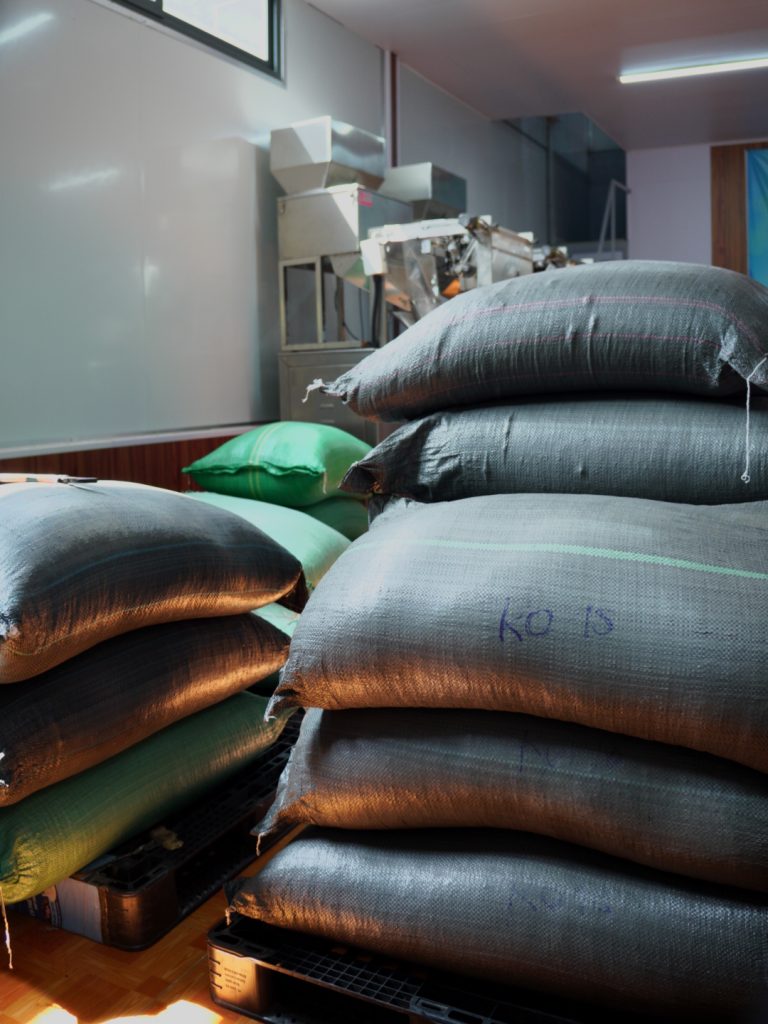
Choosing green or roasted coffee depends on which production stages your business wants to manage. Green coffee is an input for further roasting and product development. Roasted beans suit businesses looking for a confirmed product to brew or distribute. The purchase price per kilogram alone cannot compare the two models.
For cafés, F&B chains, distributors and new brands, this decision affects staffing, equipment, inventory and quality responsibilities. Start with the supply model before requesting a detailed quotation.
1. The difference is the handover stage
Green coffee has not yet been roasted. After buying it, the business still needs to organise roasting and the subsequent work required for its intended product. Roasted beans have completed roasting, but packaging, storage and intended use still need agreement.
Buying green coffee is not automatically cheaper overall. Buying roasted coffee does not remove the buyer’s responsibility to assess the product. Each model allocates different tasks between the buyer and supplier.
| Decision | Green coffee | Roasted coffee |
|---|---|---|
| Input | Material for further roasting | Beans roasted to the agreed configuration |
| Work to organise | Roasting, evaluation and product completion | Reference approval, packaging checks and use or distribution |
| Capability | Internal resources or an agreed processing partner | Supplier management and application testing |
| Assessment basis | Lot information and a suitable roasting trial | Approved sample and results in the intended application |
Review the SpringTime coffee range when preparing your requirements. Arabica or Robusta is only part of the description: specify whether you need unroasted material or a roasted product.
2. When should a business consider green coffee?
Green coffee may suit a business that wants to manage roasting and has a method for evaluating its input. An internal team or an external partner can perform that work, provided the scope is agreed.
Before ordering, identify who receives the material, runs roasting trials, approves the product and investigates unsuitable results. Owning the raw material does not by itself provide the capability to turn it into a saleable product.
- Define the material and lot records to review.
- Assign responsibility for sample trials and post-roast assessment.
- Confirm equipment or a roasting partner.
- Arrange receiving, storage and material identification.
- Track the work between input and finished product.
Do not select a lot only from its name or photograph. Ask what records and samples are available, then agree how they will be assessed for the intended application.
3. When are roasted beans a better fit?
A café or chain focused on service may prefer roasted beans tested on its actual menu. A distributor may also choose an agreed roasted product to introduce to customers and reorder consistently.
The buyer still needs an approved reference, brewing method or sales application, pack format and batch identification. Choosing only by a blend name or attractive packaging leaves little basis for resolving a delivery that differs from expectations.
For multiple locations, see coffee consistency across café chains. A common bean supply needs preparation records and a feedback process from individual outlets.
4. Compare the complete scope, not only the price per kilogram
Quotations are comparable only when their scope is clear. For green coffee, identify the work and costs still required after purchase. For roasted coffee, check what the quoted price includes and what is separate.
| Ask about | Why it matters |
|---|---|
| Input and handover product | Avoid comparing different configurations as one product |
| Roasting or packing work | Identify who organises and pays for each stage |
| Packaging materials | Separate product pricing from additional materials |
| Sample trials and adjustments | Agree scope before extra work begins |
| Delivery and storage | Clarify the handover point and responsibilities |
This guide does not apply a universal processing-loss rate, price or MOQ. Those figures require confirmation against the material, configuration, quantity and actual scope. Subtracting a green-coffee price from a roasted-coffee price does not establish the processing cost.
5. Can you buy green coffee and outsource roasting?
You can discuss that model with a processing partner, but confirm material acceptance first. The partner needs to know the material, lot condition, intended product and requested work.
Record ownership of the input, processing scope, sample approval method, handover format and treatment of remaining material. Do not send a lot first and leave responsibility to be negotiated only after a difference appears.
Explore coffee OEM manufacturing if you need a specific configuration. SpringTime must confirm whether the proposed input and project scope can be accepted.
6. A sourcing checklist before requesting a quotation
- Define the goal: brewing, distribution or product development.
- Choose the buying stage: green coffee, roasted beans or a processing scope to discuss.
- Allocate responsibility: trials, roasting, packaging and checks.
- Prepare the brief: expected quantity, packaging, receiving point and application.
- Compare like-for-like offers: scope, terms and output.
- Approve before scaling: retain sample codes, observations and confirmed requirements.
If the business does not yet have enough information, list the work it can manage and the work it needs a partner to perform. Use an agreed trial scope to resolve open questions rather than making the entire decision on headline pricing.
Frequently asked questions
Should a new café buy green or roasted coffee?
If the café has not organised roasting, assess roasted beans against its menu first. Buying green coffee requires a clear roasting and finished-product evaluation plan.
Is buying green coffee always cheaper?
No conclusion can be drawn from the input price alone. Include the subsequent work, people, materials and delivery needed to reach a comparable output.
Does a distributor need to roast its own coffee?
No. A distributor can discuss roasted products with approved references and packaging, then focus on its range and reordering process.
Can SpringTime quote both options?
Send the intended use and preferred buying stage so SpringTime can confirm the product, supply scope and applicable terms. This guide is not a quotation or acceptance of every configuration.
Discuss your coffee supply model with SpringTime
Share your intended use, the stages you want to manage, expected quantity and packaging requirements through SpringTime’s contact page. This helps both sides identify the appropriate scope and samples to discuss.