



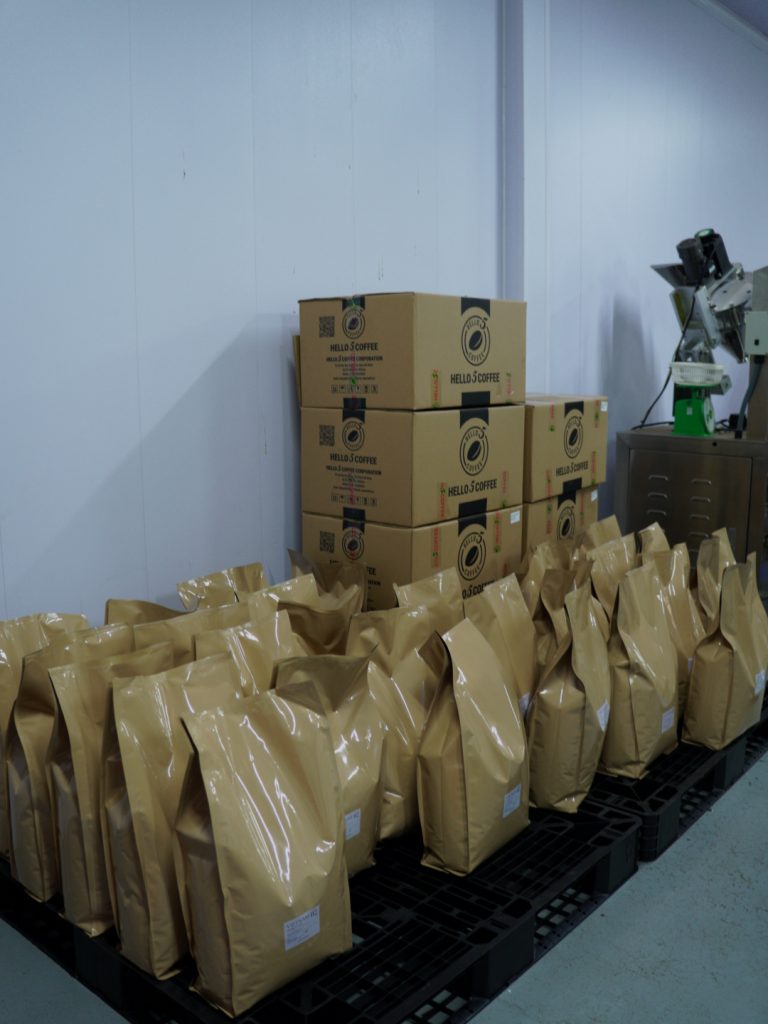
Wholesale coffee cartons require agreed selling units, bags per carton, identification and handover records before assembly. If purchasing orders bags while the warehouse receives cartons, the same order can still be interpreted differently.
This guide is for distributors, chains and brands receiving through warehouses. It covers delivery data. Materials, protective performance, transport arrangements and acceptance criteria require confirmation for the product and delivery route.
1. Separate product packs from delivery cartons
The product bag or box is the unit used by a customer or outlet. The outer carton groups units for delivery. Describe both levels separately rather than requesting only “one carton of coffee”.
Confirm whether pricing is per kilogram, bag, box or carton, then check the agreed conversion. Do not infer the number of bags from carton dimensions or photographs.
| Data level | Agree | Avoid |
|---|---|---|
| Product | Code, bean or ground format and specification | Same name for different configurations |
| Inner unit | Weight or count for the selected unit | Confusing bags, boxes and kilograms |
| Outer carton | Units per carton and identification | Unclear conversions |
| Delivery | Total units, cartons and receiving points | Correct total sent to the wrong locations |
Start with the roasted coffee buying guide for distributors. Carton planning translates the agreed range into information the warehouse can check.
2. Agree single-product or mixed-product cartons
A carton containing one product code is generally easier to reconcile, but some orders require a mixed set. Mixed cartons need a component list rather than a carton code that hides the contents.
Record the count and identification of each product. If several carton configurations are used, distinguish them on the order. A similarly sized bag is not permission to substitute one product for another.
- Product codes matching the purchase order.
- Label or packaging version where relevant.
- Units of each code in each carton configuration.
- Treatment of quantities below a full carton.
- The approver for configuration changes.
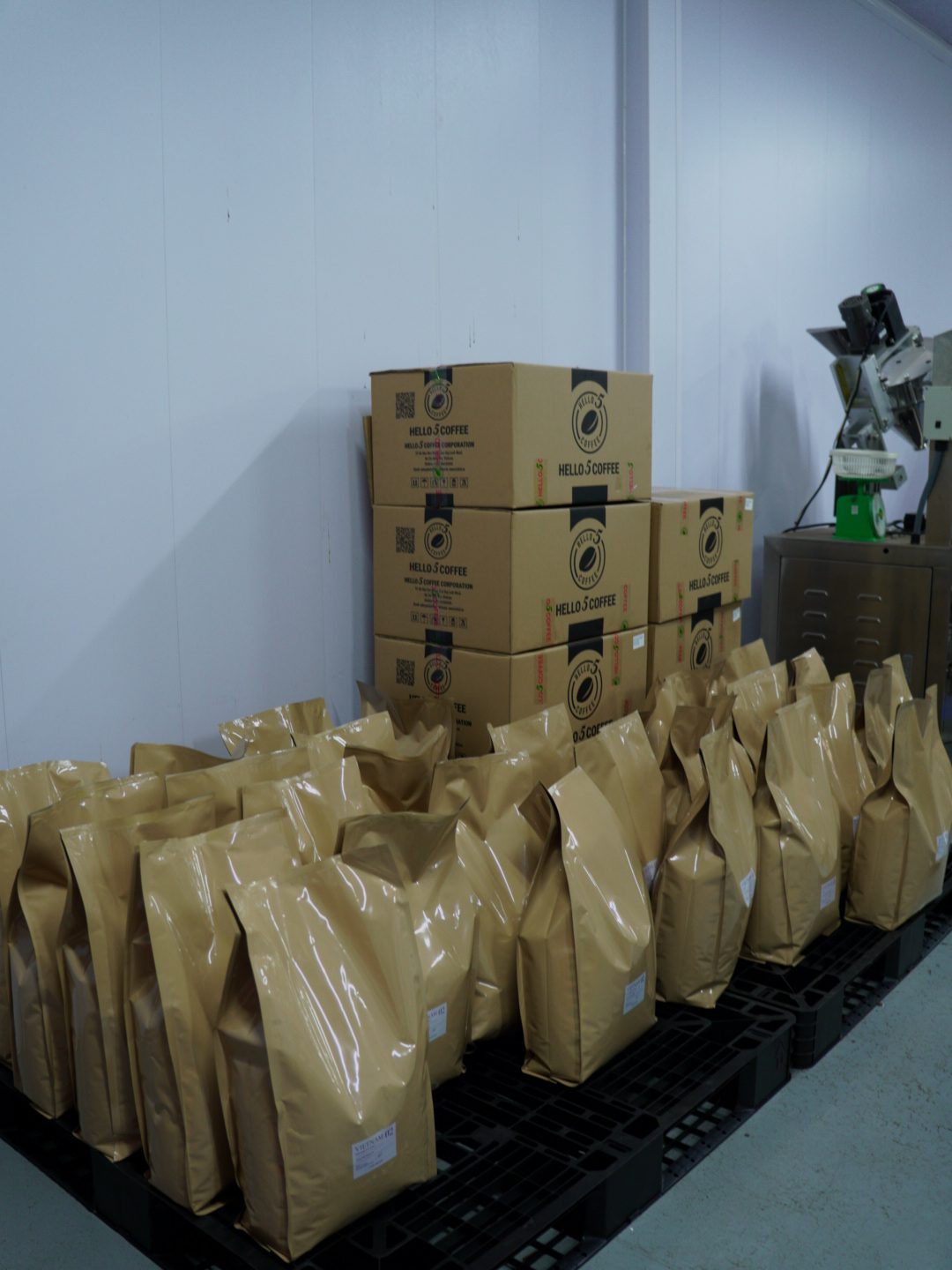
3. Agree the outer identification fields
Carton information should support reconciliation with the delivery note and purchase order. Exact fields depend on the warehouse and project; confirm any receiving label template or coding convention in advance.
A generic description does not replace product codes and quantities. Equally, do not print unconfirmed details merely to resemble a reference label.
| Field to discuss | Question |
|---|---|
| Order and product code | Which fields does receiving use? |
| Unit count | Which carton configuration applies? |
| Batch information | How does it connect to the products inside? |
| Receiving point | Central delivery or several addresses? |
| Package sequence | Does each package need identification within the delivery? |
Include carton requirements in the original coffee OEM brief rather than adding them only at dispatch.
4. Assess materials against the product and delivery
There is no default carton suitable for every product and route. Discuss actual dimensions, arrangement, protective materials and handling with the party completing the order.
A mockup or drawing does not replace checking a sample containing the actual products. If protection or stacking matters, agree an appropriate check and acceptance criteria. This guide does not prescribe technical specifications without material data.
Where the buyer supplies the input, the coffee contract packing guide helps clarify responsibilities across the work.
5. Reconcile three layers at handover
Before dispatch, compare the order, completed-goods list and package information. On receipt, record the actual quantity and visible condition, especially missing packages, wrong codes or damage.
The correct carton count may still represent the wrong unit count if configurations changed. Receiving needs to know about partial or mixed cartons and check against their contents list.
- Check product codes and configurations.
- Reconcile units, cartons and partial quantities.
- Confirm receiving points and contacts.
- Record discrepancies with package identification.
- Send feedback to the agreed responsible contact.
6. Control changes on repeat orders
Changing bags per carton changes purchasing and warehouse data, not only the physical arrangement. Notify the buyer, supplier and receiving team so everyone uses the same conversion.
Use the packaging version checklist if artwork changes. Connect product code, version and first applicable order.
Clarify materials, assembly and delivery in the quotation. Different carton formats or multiple receiving addresses should not automatically be assumed to be included in coffee pricing.
Frequently asked questions
How many coffee bags are in one carton?
Confirm against the product, pack format and carton configuration. There is no universal number for all orders.
Can a carton contain different products?
Confirm feasibility and a component list. Each product code and quantity must be clear for receiving.
Is the carton count enough to accept a delivery?
No. Check configuration, individual units and order data as well.
Is the carton included in the product price?
That depends on the quotation and agreed scope. Ask separately about materials, assembly and delivery.
Discuss carton requirements with SpringTime
Share your range, formats, order quantity and receiving plan through SpringTime’s contact page before confirming handover arrangements.